A solar-powered property in Phoenix has one major advantage right out of the gate: sunlight. Lots of it.
But that doesn’t mean every solar project is automatically a smart investment. As solar demand has grown across Arizona, so has the number of companies trying to sell it. Some are experienced electrical contractors. Some are mostly sales teams. And a few, frankly, are just chasing commission checks.
That’s where homeowners and business owners need to slow down and ask better questions.
Choosing a reliable solar energy contractor in Phoenix is not just about who offers the lowest price or the slickest sales pitch. It’s about hiring a company that understands Arizona heat, local permitting, utility rules, electrical safety, long-term maintenance, and the kind of workmanship that still holds up ten summers from now.
As Mike Holmes often says, “Make it right” (Mike Holmes). In solar, that mindset matters.
What should I check before hiring a solar contractor in Phoenix?
Before hiring a solar contractor in Phoenix, check their Arizona ROC license, local experience, in-house installation crew, equipment quality, warranty support, APS or SRP utility knowledge, and experience with Phoenix heat, dust, monsoons, and solar battery backup systems.
A reliable solar company should provide a detailed proposal, realistic production estimates, clear equipment specs, local references, and no high-pressure sales tactics.
How In-House Installers Make a Difference
When searching for a solar energy contractor in Phoenix, one of the first things to check is who actually performs the work.
Some companies sell the solar contract, then outsource the installation to the lowest available crew. That creates a gap in accountability. If something goes wrong, the salesperson blames the installer, the installer blames the design, and the homeowner gets stuck in the middle.
Nobody wants that.
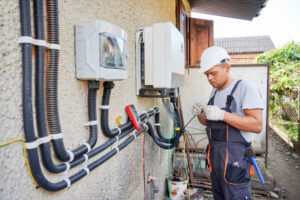
An in-house solar crew is different. The company directly employs the technicians, trains them consistently, follows its own safety protocols, and keeps communication flowing from the office to the project manager to the job site.
That usually leads to:
- Cleaner installations
- Better code compliance
- Fewer delays
- Stronger quality control
- Better long-term service
This matters even more for commercial solar installation in Phoenix, where the electrical loads, permitting requirements, and project timelines are more complex.
The Climate Impacts Your Decision
Phoenix solar is not the same as solar in a mild coastal climate.
Arizona heat pushes even well-designed systems hard. Solar panels, inverters, wiring, racking, seals, and batteries all have to handle intense UV exposure, triple-digit temperatures, dust storms, and monsoon wind.
Your solar contractor should understand:
- Thermal expansion
- Proper panel airflow
- Roof temperature concerns
- Inverter placement
- Dust buildup
- Wind resistance
- Battery location and ventilation
If a contractor cannot explain how Phoenix heat affects system production, that’s a warning sign.
Why Phoenix’s Unique Climate Demands a Specialized Contractor
Phoenix’s desert climate can be a blessing and a challenge. On one hand, the Valley gets more than 300 sunny days per year. That gives properly designed systems excellent production potential.
On the other hand, summer roof temperatures can climb far above the outdoor air temperature. When that happens, solar panels lose some efficiency. This is normal, but a good contractor knows how to limit the loss.
From real-world Arizona installations, the biggest climate-related issues usually include:
- Thermal expansion causing cracked seals or loose connections
- Dust and sand reducing output
- Monsoon winds stressing poorly mounted systems
- Heat-related inverter stress
- Poor airflow under panels
Ask your contractor about the temperature coefficient of the panels they recommend. In Phoenix, panels with a coefficient better than -0.30% per °C are usually stronger performers in high heat.
A contractor who has been installing solar in the Valley for years should be able to explain this clearly without drowning you in jargon.
Credentials and Local Compliance
Arizona law is strict about electrical contracting, and for good reason. Solar is not just equipment sitting on a roof. It ties directly into your electrical system.
Every legitimate solar energy contractor in Phoenix should hold a valid license through the Arizona Registrar of Contractors, also known as the ROC.
Before signing anything, verify:
- The company’s ROC license is active
- The license matches the type of work being performed
- There are no serious unresolved complaints
- The company carries insurance
- They understand local permitting rules
Solar installers in Maricopa County must also understand requirements that vary by city, utility, and project type. Phoenix, Scottsdale, Mesa, Chandler, Gilbert, and Glendale may all have slightly different processes.
Local experience saves time. It also saves aggravation.
Beyond the Panels
Panels are important, but they are not the whole system.
Reliable solar contractors in Phoenix take a holistic view of your property. They should look at your roof, electrical panel, utility rate plan, future energy needs, and whether battery storage makes sense.
For homeowners, that might mean designing a residential solar system that offsets rising electric bills and supports time-of-use savings.
For business owners, it might mean a commercial solar system that reduces operating costs, demand charges, and long-term exposure to utility rate increases.
If a contractor only talks about panel count and never asks about your main breaker panel, roof condition, or future energy loads, they may be selling a system instead of designing one.
There’s a big difference.
Future-Proofing with Battery Backup
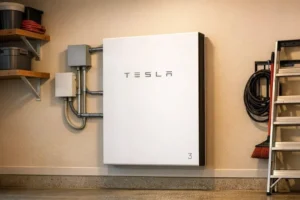
Battery backup is becoming more important in Phoenix, especially with time-of-use rates, monsoon-related outages, and growing grid demand.
A standard grid-tied solar system usually shuts down during a power outage for safety. If you want backup power, you need battery storage and the right electrical configuration.
Solar battery backup in Phoenix requires:
- Load calculations
- Smart circuit planning
- Proper inverter compatibility
- Safe battery placement
- Utility coordination
- Long-term monitoring
Choose a residential or commercial solar contractor in Phoenix, AZ with real battery experience. Battery storage is not something to hand off to a crew learning on the fly.
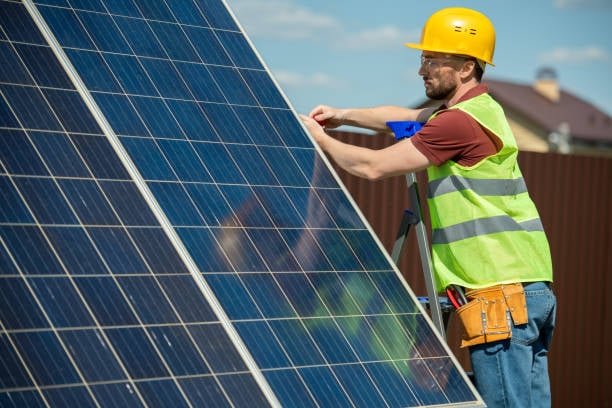
Step-by-Step Solar Installation Process in Phoenix
A professional solar contractor for commercial should walk you through the process before the first panel ever arrives.
1. Site Assessment and Proposal
The contractor reviews your roof, shade exposure, energy usage, electrical panel, and utility bills.
The proposal should include:
- System size
- Expected production
- Equipment brands
- Warranty details
- Projected savings
- Estimated timeline
2. Permitting and Utility Coordination
Your installer handles city or county permitting, fire approvals when required, and APS or SRP interconnection paperwork.
For many Phoenix-area projects, permitting and interconnection can be the slowest part of the process. An experienced local team knows how to keep things moving.
3. Installation
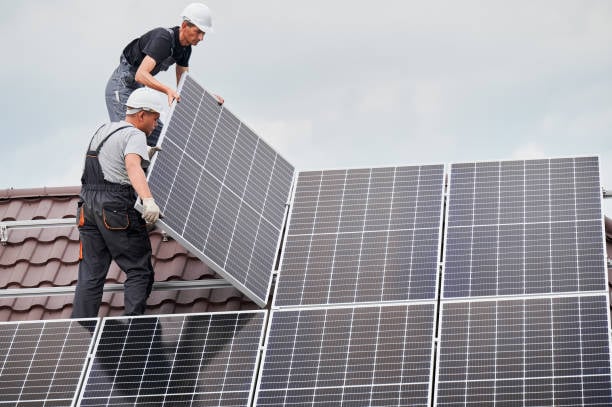
Most residential solar installations take 1 to 3 days once permits are approved. Larger commercial solar projects may take longer depending on roof size, electrical complexity, and equipment staging.
In-house crews can make this phase smoother because they are trained to follow the company’s standards.
4. Inspection and PTO
After installation, the city or county inspects the system. Then the utility reviews it and issues Permission to Operate, often called PTO.
This can take 2 to 6 weeks depending on the utility, project complexity, and current workload.
5. Post-Install Support
After activation, the contractor should set up your monitoring app and explain how to track production.
This is also when you should discuss:
- Maintenance schedule
- Warranty claims
- Cleaning recommendations
- Battery performance, if included
A good solar company does not vanish once the system turns on.
Understanding Costs, Incentives, and ROI in Phoenix
A quality solar installation in Phoenix often costs between $2.50 and $3.50 per watt before incentives, depending on equipment, roof type, battery storage, and electrical upgrades.
A typical residential system in the 8 to 12 kW range may fall between $20,000 and $35,000 before tax credits and incentives.
Local factors that affect ROI include:
- APS or SRP rate plan
- Time-of-use pricing
- Net billing policies
- Battery storage
- Roof orientation
- Shade
- Energy usage patterns
Phoenix’s abundant sun gives many systems a strong payback window, but exact savings should always be modeled using your real utility data.
Ask these questions:
- What is the projected 25-year savings?
- What maintenance costs are included?
- How do you handle warranty claims locally?
- What production guarantee do you offer?
- Is the estimate based on Phoenix-specific weather modeling?
One Phoenix homeowner we advised saved more than $2,000 annually after adding battery integration for peak time-of-use rates and backup power. That kind of result does not happen by accident. It comes from proper design.
Common Scams and Red Flags in Arizona Solar
Solar has grown fast in Arizona, and fast-growing industries attract shortcuts.
Watch out for:
- “Today-only” discounts
- Claims of totally free solar
- Out-of-state companies with no local crew
- Vague equipment details
- Unrealistic production estimates
- No ROC license listed
- Poor communication after the sale
- Pushy salespeople who avoid technical questions
A trustworthy contractor will not pressure you. They will educate you.
Before signing, verify the ROC license, read recent reviews, and ask to meet or speak with the actual project manager. Not just the salesperson.
Maintenance and Long-Term Performance Tips
Solar panels do not need constant attention, but Phoenix conditions make maintenance worth taking seriously.
Dust, pollen, bird debris, monsoon dirt, and extreme heat can reduce performance over time.
Smart maintenance includes:
- Annual system inspection
- Production monitoring through an app
- Cleaning when dust buildup is noticeable
- Inverter checks
- Wiring and connection inspections
- Battery health checks
Batteries typically last 10 to 15 years, depending on use, heat exposure, and manufacturer. Keep them shaded, ventilated, and monitored.
A little maintenance can protect years of savings.
Make the Right Choice
When navigating the Phoenix solar market, choose a contractor with deep Arizona experience, not just a polished sales presentation.
A company that has been around for decades is more likely to be here when you need warranty support, maintenance, or system expansion years from now.
Solar is a long-term investment. It should feel like one.
If you are comparing solar installers in Phoenix, look for technical knowledge, honest communication, local references, and a straightforward plan for your property.
Ready to explore solar the right way? Reach out to a licensed Phoenix solar contractor for a professional site evaluation and a clear proposal based on your actual energy needs.
FAQ
The Arizona Registrar of Contractors licenses and regulates contractors in the state. A valid ROC license helps confirm that a contractor meets Arizona requirements for legal, safe electrical work.
Standard grid-tied solar systems usually shut down during outages for safety. If you want backup power, you need battery storage and the proper transfer equipment.
Heat can reduce panel efficiency and place stress on inverters. Proper mounting, airflow, quality panels, and strong equipment selection help reduce performance loss.
Properly installed systems are designed to handle wind and rain. Secure mounting, code-compliant wiring, and quality racking reduce risk. Battery storage can also help during outage events.
Battery storage can be valuable for outages, time-of-use savings, and energy independence. It is especially useful in areas with peak evening rates or frequent storm-related outages.
Most residential projects take 1 to 3 days to install after permits are approved, but the full process from proposal to PTO may take several weeks.
Look for an active ROC license, local Phoenix experience, in-house crews, clear equipment details, realistic production estimates, strong reviews, and no high-pressure sales tactics.