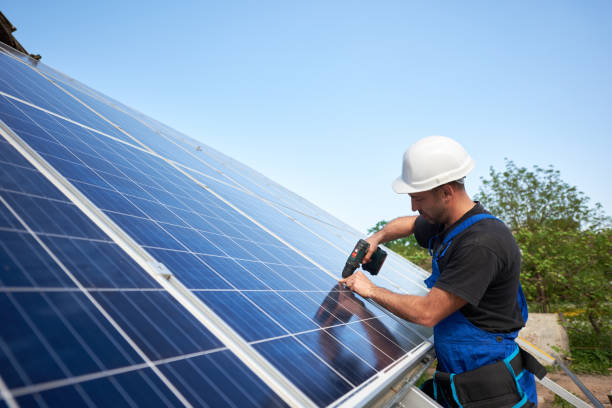
Your solar panels have one job: turn Arizona sunshine into electricity. And with as much sun as Phoenix gets, you’d expect them to be working pretty hard.
But what happens when your monitoring app suddenly shows lower production? Or one panel stops producing altogether? Is it just another scorching summer day, a layer of desert dust, or something that needs professional attention?
The answer isn’t always obvious.
Between triple-digit temperatures, dust storms, monsoon winds, and pigeons nesting under rooftop panels, solar systems in Phoenix deal with conditions that can affect performance and occasionally damage equipment.
The good news is that not every drop in production means something is broken. Knowing the difference can save you an unnecessary service call or help you catch a small problem before it becomes an expensive repair.
How Do You Know if Your Solar Panels Need Repair?
Your solar panels may need professional repair if production drops significantly without an obvious weather-related cause, an inverter displays recurring fault codes, individual panels stop producing, or you notice damaged wiring, cracked glass, or loose mounting hardware. Minor fluctuations from heat, dust, clouds, and seasonal changes are normal. Persistent or sudden problems deserve closer attention.
The trick is knowing what normal solar production looks like for your particular system.
What’s Normal Solar Production in Phoenix?
Solar panels don’t produce the same amount of electricity every day, even when the weather looks similar.
A system that’s performing perfectly in April may generate less power during a blazing July afternoon. That doesn’t necessarily mean anything is wrong.
Phoenix Heat Can Reduce Solar Panel Efficiency
Here’s something that surprises many homeowners: solar panels actually become less efficient as they get hotter.
Most crystalline silicon solar panels lose approximately 0.3% to 0.4% of rated power for every degree Celsius that their cell temperature rises above 77°F (25°C).
And panel temperature isn’t the same as the outdoor air temperature.
On a clear Phoenix summer afternoon, rooftop solar cells can reach 140°F to 160°F or higher, depending on airflow, mounting, and other conditions.
At a cell temperature of 150°F, for example, temperature-related power loss can be approximately 13% to 16% compared with the panel’s rated output at standard test conditions.
That’s normal behavior, not necessarily a malfunction.
What normal heat-related performance looks like:
- Lower instantaneous output during the hottest afternoon hours
- Stronger efficiency during cooler morning conditions
- Production changes that follow temperature and sunlight patterns
- Normal inverter operation without recurring error codes
Don’t compare your panels’ peak output to their nameplate rating without accounting for temperature, sunlight intensity, system losses, and inverter limitations.
A 10 kW solar array isn’t guaranteed to produce 10 kW every time the sun is shining.
Seasonal Changes and Cloud Cover Affect Production
The angle of the sun changes throughout the year, and so does the amount of daylight.
Clouds, haze, wildfire smoke, and monsoon weather can also affect solar generation.
A sudden afternoon drop during a passing storm is usually nothing to worry about.
The more useful question is whether your system returns to its expected production afterward.
Compare Monthly Trends, Not Just Yesterday’s Numbers
One of the easiest ways to spot a developing solar problem is to review historical production in your monitoring app.
Compare May with May, or October with October, rather than comparing two unrelated days.
Look for:
- Similar monthly production patterns
- Gradual changes over time
- Sudden unexplained declines
- Individual panels or strings producing less than others
- Recurring shutdowns or monitoring alerts
A year-over-year difference of 5% to 10% may be explained by weather, shading, or soiling, but it isn’t a universal acceptable threshold.
If production is consistently 20% or more below a comparable period from the previous year, especially after accounting for weather and cleaning, it’s worth investigating.
Also remember that monitoring systems can have communication problems. A blank production chart doesn’t always mean the panels stopped generating electricity.
Dust, Haboobs, and Dirty Solar Panels: When Cleaning Is Enough
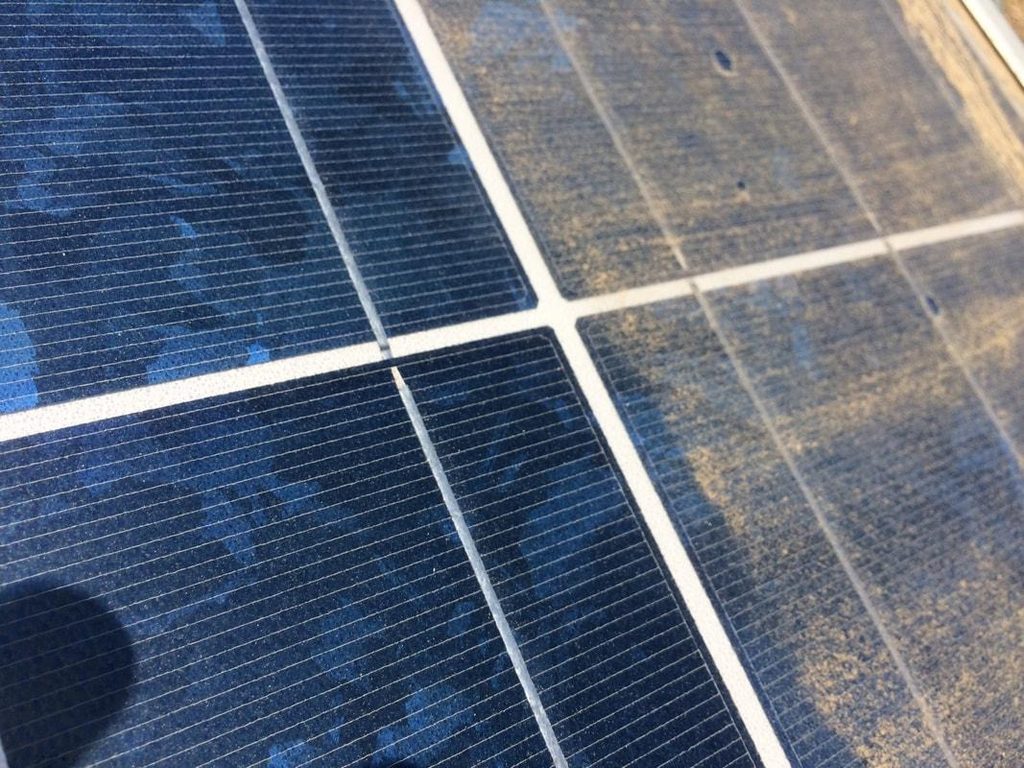
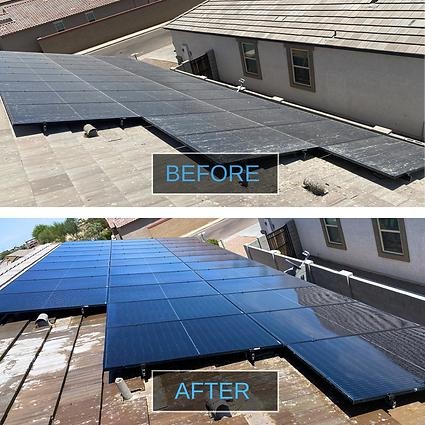
Phoenix dust storms can leave an impressive amount of dirt behind.
Unfortunately, some of that dust settles on your solar panels.
Even a thin layer can reduce the amount of sunlight reaching the solar cells.
How Much Production Can Dirty Panels Lose?
The impact depends on how much dirt accumulates, how long it stays there, and whether the panels are exposed to rain or wind.
Under dry, dusty conditions, solar soiling losses can accumulate over time. In some environments, losses of several percent over a month are possible.
Heavy dust storms, bird droppings, and localized debris can cause larger reductions.
But don’t assume every haboob causes a specific percentage of production loss. The effect varies considerably by site.
Signs your panels may simply need cleaning:
- Production declined after a major dust storm.
- A visible film covers the panels.
- No inverter faults or electrical warnings are present.
- The entire array shows a relatively similar reduction.
- Production improves after appropriate cleaning.
If output remains unusually low after the panels are clean, the problem may be electrical rather than environmental.
Doesn’t Monsoon Rain Clean Solar Panels?
Sometimes rain helps. Other times, it leaves a muddy film.
Phoenix rain can mix with airborne dust and create residue that remains after the water evaporates.
A strong storm may wash away loose dirt, but it doesn’t guarantee clean glass.
For many properties, inspecting production after major dust storms and again after monsoon season is a reasonable starting point.
Homes with frequent pigeon activity or unusually dusty surroundings may need more attention.
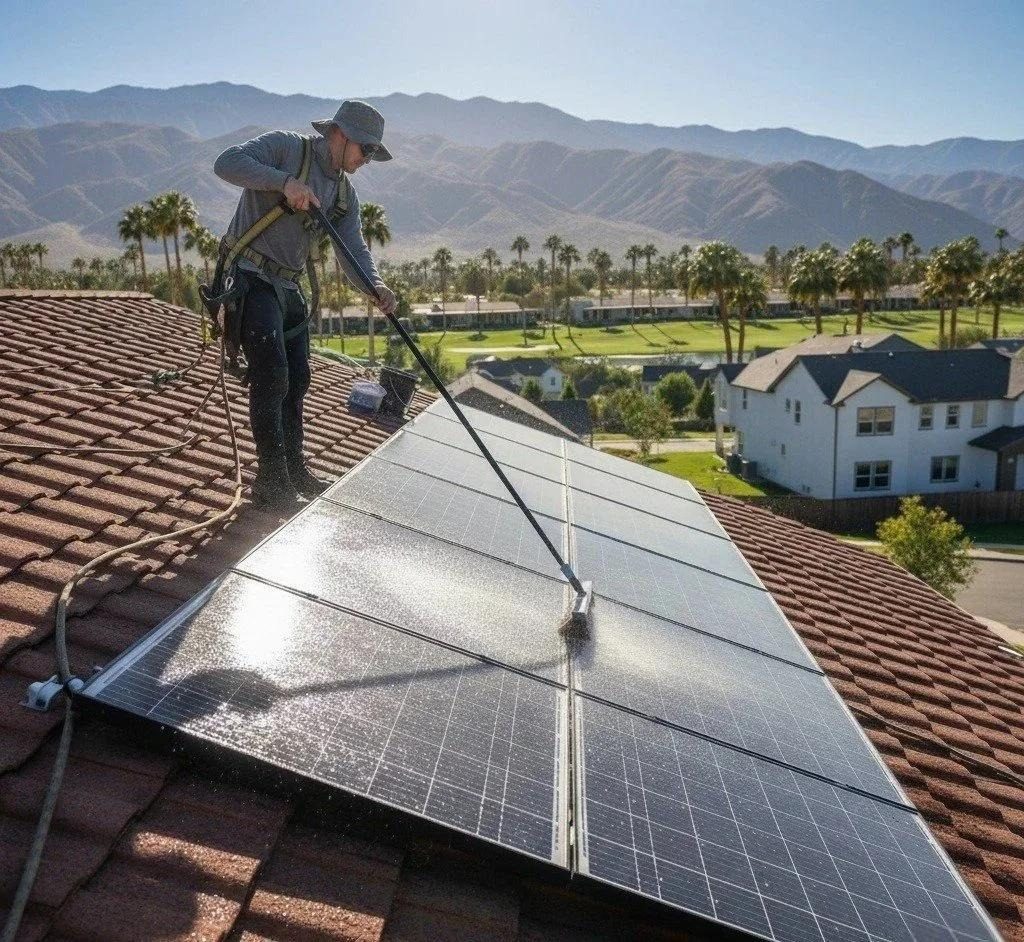
Should You Wash Solar Panels Yourself?
Solar panels are durable, but improper cleaning can damage them.
Avoid:
- Pressure washers
- Abrasive brushes or pads
- Harsh cleaning chemicals
- Cleaning extremely hot panels with cold water
- Walking on the panels
- Spraying damaged electrical components
Phoenix’s mineral-rich water can also leave deposits on glass. Properly treated or deionized water may help reduce spotting.
Most importantly, rooftop cleaning carries fall and electrical hazards.
If the array is difficult to access, or if you see cracked glass, exposed wiring, or other damage, leave the work to a qualified professional.
Solar Panel Problems That Need Professional Attention
Some issues are inconvenient. Others can affect electrical safety.
Here’s how to recognize the difference.
1. Your Solar System Suddenly Stops Producing Electricity
A complete loss of production on a sunny day is one of the clearest signs that something needs investigation.
Possible causes include:
- Inverter failure
- Tripped breaker
- Open disconnect
- Utility voltage problems
- Ground fault
- Arc fault
- Damaged wiring
- Monitoring or communication failure
Start by checking whether your monitoring app is actually communicating with the system.
If the app is offline, the solar array may still be producing electricity.
If the inverter confirms zero production during normal daylight conditions, professional troubleshooting may be necessary.
2. Your Inverter Displays Error Codes or Warning Lights
The inverter is one of the most important components in your solar system.
It converts electricity from the panels into usable AC power for your home.
Depending on the manufacturer, warning signs may include:
- Red or flashing indicator lights
- Fault messages in the monitoring app
- Repeated inverter restarts
- Arc-fault or ground-fault alerts
- Communication errors
- Unexplained shutdowns
Not every red light means the same thing. Indicator colors and fault codes vary by manufacturer and model.
An inverter displaying a grid-related warning during a utility outage may be operating exactly as designed.
A recurring electrical fault is another matter.
If an arc-fault or ground-fault warning appears, don’t repeatedly reset the equipment. Follow the manufacturer’s safety instructions and arrange professional service.
3. One Solar Panel Stops Producing While the Others Work
This is particularly noticeable on systems with panel-level monitoring.
If your monitoring app shows one module producing nothing while neighboring panels are working normally, the issue may involve:
- Failed microinverter
- Power optimizer fault
- Damaged solar module
- Loose or damaged connector
- Wiring problem
- Monitoring communication issue
The rest of the system may continue producing normally, which makes this type of failure easy to overlook.
One failed panel may not cause an obvious change in your monthly electricity bill.
But over time, the lost production adds up.
4. You Notice Cracked Glass or Physical Damage
Solar panels are built to withstand outdoor conditions, but they’re not indestructible.
Windblown debris, severe weather, impact damage, and installation-related stress can damage modules.
Warning signs include:
- Cracked or shattered glass
- Burn marks
- Melted connectors
- Exposed conductors
- Loose electrical components
- Shifted or detached panels
Visible damage should be assessed by a professional.
A cracked panel may continue generating electricity, but that doesn’t make it safe.
Moisture intrusion, insulation failure, and electrical faults are legitimate concerns.
5. Your Solar Breaker Keeps Tripping
A breaker that trips repeatedly is telling you something.
It may be reacting to an electrical fault, damaged equipment, or another condition that requires investigation.
Don’t keep resetting it to see if the problem goes away.
Repeatedly energizing a faulty circuit can create additional hazards.
6. You Notice Water Stains or Roof Leaks Near the Solar Array
Not every solar repair involves the electrical system.
Mounting hardware and roof penetrations must remain properly secured and weatherproofed.
If you notice ceiling stains or water intrusion near the solar installation, the cause may involve:
- Damaged flashing
- Failed sealant
- Roof deterioration
- Disturbed mounting hardware
- Improperly installed roof attachments
A roof leak should be investigated promptly.
The right repair may require coordination between a qualified solar contractor and a roofing professional.
Solar Panel Repair or Cleaning? A Quick Decision Guide
| What you’re noticing | Possible cause | Recommended action |
| Light dust and modest production decline | Normal soiling | Arrange appropriate cleaning and compare production |
| Heavy dust after a haboob | Significant soiling | Clean safely, then review monitoring |
| One panel at zero, others normal | Module, optimizer, microinverter, or communication issue | Schedule diagnostics |
| Entire system at zero on a sunny day | Inverter, breaker, utility, or monitoring problem | Check app and visible status, then call if unresolved |
| Recurring inverter fault code | Equipment or electrical fault | Contact a qualified solar technician |
| Arc-fault or ground-fault warning | Potential electrical hazard | Follow manufacturer shutdown instructions and request service |
| Cracked glass or burned connector | Physical or electrical damage | Keep clear and arrange prompt professional assessment |
| Bird nests or chewed wiring | Wildlife damage | Have wiring inspected and discuss exclusion measures |
| Loose panel after a storm | Mounting damage | Stay clear and arrange urgent inspection |
| Ceiling stain below the array | Possible roof penetration leak | Arrange roof and solar inspection |
When there’s visible electrical damage, smoke, arcing, or a burning smell, treat the situation as a safety concern rather than a routine maintenance issue.
Common Solar System Problems in Phoenix, Arizona
The Valley’s climate creates some challenges that homeowners in cooler or less dusty regions don’t encounter as frequently.
Inverter Wear and Heat Stress
Solar inverters contain electronic components that work hard throughout the day.
Heat, age, electrical stress, and operating conditions can contribute to equipment failures.
Some string inverters may need significant service or replacement after roughly 10 to 15 years, although actual service life varies by manufacturer, model, installation conditions, and maintenance.
Microinverters and other equipment may have different expected lifespans and warranty terms.
Phoenix heat makes proper equipment placement and ventilation especially important.
Pigeons, Rodents, and Damaged Wiring
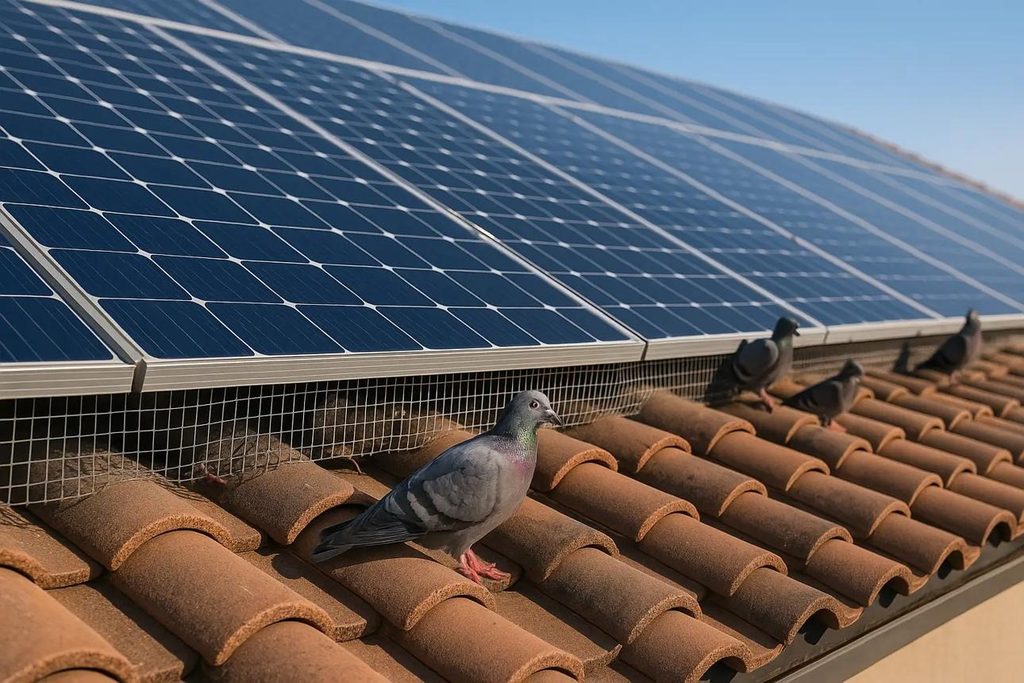
Pigeons are a familiar problem for Phoenix solar homeowners.
The shaded space beneath rooftop panels can make an attractive nesting area.
Over time, nesting activity can lead to:
- Accumulated debris
- Damaged wiring insulation
- Restricted airflow
- Corrosion or contamination from droppings
- Increased maintenance needs
Rodents may also chew exposed wiring, potentially causing shorts or ground faults.
A proper repair addresses the damaged components first, then considers suitable bird screening or other prevention measures.
Simply removing a nest without inspecting the wiring may leave the underlying problem unresolved.
Monsoon Wind and Storm Damage
Arizona monsoons can bring strong wind gusts, blowing debris, and heavy rain.
After a significant storm, it’s worth checking your system’s production and looking for visible damage from the ground.
Potential problems include:
- Dislodged panels
- Loose clamps
- Damaged wiring
- Broken modules
- Bent or damaged mounting components
- Roof leaks near mounting points
Properly installed solar racking is engineered to withstand applicable wind loads, but severe weather and existing installation defects can still cause damage.
Don’t climb onto the roof to inspect a panel that appears loose or shifted.
String Inverter vs. Microinverter: What Your Monitoring App Can Tell You
Understanding the type of solar equipment you own can help narrow down the problem.
String Inverter Systems
A traditional string inverter connects multiple solar panels into electrical strings.
If an inverter fails, a substantial portion of the array may stop producing.
Depending on the system design, shading or failure of an individual panel can also affect string performance.
Common troubleshooting areas include:
- Inverter status and fault history
- DC string voltage
- AC output
- Wiring and connectors
- Ground faults
- Disconnects and breakers
Systems using power optimizers may provide additional panel-level information.
Microinverter Systems
Microinverters convert electricity at individual solar modules.
On systems with compatible monitoring, a technician may be able to identify an underperforming panel or microinverter without first inspecting every module.
Common problems include:
- Failed microinverter
- Module wiring or connector damage
- Communication issues
- Branch-circuit faults
- Individual module damage
The advantage is that a single failed microinverter may leave most of the array operating normally.
The downside is that homeowners may not notice the problem unless they check their monitoring data.
What Information Should You Have Before Calling?
If possible, gather:
- Inverter manufacturer and model
- Solar system installation year
- Approximate system size
- Monitoring app screenshots
- Error codes
- Date production began declining
- Photos of visible damage taken safely from the ground
This information can help the repair technician prepare for the visit and narrow down the likely causes.
Solar Problems That Shouldn’t Wait
Some solar issues should be addressed promptly, even if the system is still producing electricity.
These include:
- Burning smells or visible smoke
- Melted or scorched electrical components
- Exposed or damaged wiring
- Recurring arc-fault or ground-fault warnings
- Cracked modules with signs of moisture intrusion
- Panels that have shifted or partially detached
- Water entering the home near solar mounting points
If you notice smoke, arcing, or an active electrical hazard, stay clear of the equipment and contact emergency services when appropriate.
For other suspected electrical faults, follow the manufacturer’s shutdown procedure only if it can be performed safely. Don’t open equipment, handle damaged conductors, or attempt repairs.
Important: Solar panels can continue generating DC electricity whenever sunlight reaches them. Turning off a breaker does not necessarily make every component or conductor safe to touch.
What Can You Safely Check Before Scheduling Solar Repair?
You don’t need to diagnose the electrical system yourself.
A few simple observations can help determine whether professional service is needed.
- Check your monitoring app. Look for production history, alerts, and communication status.
- Check whether the utility grid is operating normally. Grid disturbances can temporarily interrupt solar production.
- Look at the inverter’s external display. Record any visible error codes without opening the equipment.
- Check for visible damage from the ground. Look for shifted panels, bird nests, or broken glass.
- Review recent weather. Did the problem begin after a dust storm, monsoon, or utility outage?
- Compare historical production. Look for persistent declines rather than isolated daily changes.
If a breaker has tripped, don’t repeatedly reset it. Follow the manufacturer’s instructions and contact a qualified professional if the cause is unclear.
Avoid opening inverter cabinets, disconnecting solar connectors, or climbing onto the roof.
A few screenshots and observations are helpful. Risking an electrical injury isn’t.
What Happens During a Professional Solar Repair Visit?
A good solar repair visit should involve more than looking at the panels and guessing which component needs replacing.
The objective is to identify the actual problem before recommending parts or major equipment changes.
Step 1: Review Production History
The technician may begin by reviewing your monitoring data.
This can reveal:
- When production declined
- Whether the problem is intermittent
- Which modules or strings are affected
- Whether the issue follows temperature changes
- Whether fault codes coincide with production losses
Step 2: Inspect the Equipment
Depending on the symptoms and site conditions, the inspection may include:
- Solar modules
- Inverter
- Disconnects
- Electrical panels
- Wiring and connectors
- Racking and mounting hardware
- Bird screening
- Roof penetrations
If a roof leak is suspected, attic or roofing inspection may also be appropriate.
Step 3: Perform Electrical Diagnostics
Qualified technicians use appropriate test equipment and manufacturer information to isolate the failure.
Depending on the system, this may involve:
- Voltage and current measurements
- String testing
- Insulation resistance testing
- Inverter error logs
- Panel-level production analysis
- Connector and circuit inspection
- Manufacturer diagnostic procedures
Not every problem requires the same tests.
The diagnostic approach should match the symptoms and equipment.
Step 4: Explain the Findings and Repair Options
Before approving significant repair work, you should understand:
- What failed
- Why the technician believes it failed
- Whether other components were affected
- What repair is recommended
- Whether replacement parts are available
- Whether any warranty may apply
- What the repair will cost
A written diagnosis and clear estimate help prevent unnecessary replacements.
At Watt Masters, that electrical troubleshooting mindset is central to how solar repair should be approached.
Find the problem first. Then determine the right fix.
How Much Does Solar Panel Repair Cost in Phoenix?
Repair costs depend on what’s wrong, the equipment involved, and how difficult it is to access.
A dirty panel and a failed inverter are entirely different projects.
For preliminary budgeting, homeowners may encounter ranges such as:
| Service | Approximate cost |
| Residential solar panel cleaning | $150 to $300 |
| General solar system inspection | $200 to $400 |
| Basic electrical troubleshooting or minor repair | A few hundred dollars and up |
| More involved component repair | $500 to $1,500+ |
| Inverter replacement | Varies significantly by manufacturer, size, and installation |
These are general planning estimates, not verified Watt Masters pricing or guaranteed Phoenix quotes.
What Affects Solar Repair Pricing?
Several factors can influence the final cost:
- Roof height and accessibility
- Tile roof versus shingle roof
- Equipment manufacturer
- Availability of replacement parts
- System age
- Warranty status
- Extent of electrical damage
- Whether panels must be removed
- Permitting requirements
- Additional roof or mounting repairs
A simple monitoring issue may require little physical work.
A damaged connector beneath a rooftop array may require removing panels and accessing wiring in a much more difficult location.
That’s why an accurate diagnosis matters.
Will My Solar Warranty Cover the Repair?
Possibly.
Solar systems may have separate warranties for panels, inverters, microinverters, optimizers, and installation workmanship.
Manufacturer warranties may cover qualifying equipment defects but not necessarily labor, travel, shipping, roof access, or damage caused by animals or storms.
Before authorizing work, ask which costs may be covered and which remain your responsibility.
Who Repairs Solar Panels if the Original Installer Went Out of Business?
If your original solar installer has closed, you can still have your system serviced by another qualified contractor.
You’re not required to abandon a working solar array simply because the company that installed it is no longer operating.
An appropriately licensed Arizona solar or electrical contractor can evaluate equipment installed by another company, subject to the work being within its license scope.
This has become particularly relevant for homeowners whose systems were installed by companies such as Titan Solar Power, Solcius, Zenernet, Erus Energy, or other former Arizona solar providers.
Are Manufacturer Warranties Still Valid?
They may be.
A solar installer’s closure doesn’t automatically cancel every manufacturer warranty.
Panels, inverters, and other equipment may have separate coverage through their respective manufacturers.
However, warranty eligibility, claim procedures, labor coverage, and approved service requirements vary.
A replacement contractor can help identify the equipment and determine the appropriate warranty process.
What Should You Have Ready?
Gather whatever information you still have:
- Original installation paperwork
- Equipment manufacturer and model
- System installation date
- Monitoring account access
- Warranty documents
- Utility interconnection records
- Photos of equipment labels
- Error codes or production screenshots
Don’t worry if you don’t have everything.
A qualified technician can often identify equipment during an inspection.
Will a Repair Require New Permits or Utility Approval?
It depends on the scope of work.
A straightforward replacement using equivalent approved equipment may have different requirements from a project that changes inverter capacity, electrical connections, or system design.
Significant modifications may require permits or updated APS or SRP interconnection documentation.
Your contractor should determine what applies before starting the work.
Does Homeowners Insurance Cover Solar Panel Storm Damage?
Many homeowners insurance policies treat permanently attached rooftop solar panels as part of the dwelling.
That means certain covered events, such as wind or hail damage, may fall under the policy.
However, coverage varies.
Deductibles, exclusions, policy limits, and distinctions between cosmetic and functional damage can affect a claim.
Routine wear, maintenance problems, and animal damage may be treated differently from sudden storm damage.
What to Do After a Monsoon Damages Your Solar System
If you suspect storm damage:
- Photograph visible damage from a safe location.
- Save monitoring screenshots showing when production changed.
- Document any roof leaks or interior water stains.
- Avoid touching damaged panels or wiring.
- Contact your insurance provider to understand the claim process.
- Arrange a professional inspection and request written findings.
A technician’s photos and explanation of the likely cause can help document the damage.
Don’t remove or discard damaged components without coordinating with the insurer when a claim is involved, unless immediate action is necessary for safety.
How to Help Your Solar System Last Longer in Phoenix
Solar systems generally require less routine maintenance than many other home systems, but they shouldn’t be ignored.
A few habits can help you catch problems early.
Check Your Monitoring App Regularly
You don’t need to study production graphs every day.
A quick review every few weeks, especially during summer and monsoon season, can help identify unusual changes.
Enable fault notifications when your monitoring platform supports them.
Pay Attention After Major Storms
Check for production changes and visible damage after strong winds or heavy dust storms.
Don’t climb onto the roof.
Address Bird Activity Early
If pigeons begin nesting beneath your panels, consider having the array inspected and appropriate bird screening installed.
Early intervention may prevent wiring damage and accumulated debris.
Keep Electrical Equipment Accessible
Avoid storing items against inverter cabinets, disconnects, or electrical panels.
Required working clearances and ventilation should remain unobstructed.
Don’t Ignore Recurring Error Codes
A temporary utility-related interruption may clear on its own.
A fault that returns repeatedly deserves investigation.
Waiting until the entire system stops producing can turn a manageable problem into a larger inconvenience.
Need Solar Panel Repair in Phoenix? Start With the Right Diagnosis
A properly installed solar system should provide years of dependable electricity generation.
But Arizona’s heat, dust, wildlife, and monsoon weather can create challenges over time.
Some production changes are completely normal. Others indicate damaged equipment, electrical faults, or problems that can become more serious if ignored.
The best approach is to understand what your system is telling you and avoid replacing equipment before the problem has been identified.
Watt Masters has served Arizona since 1999, bringing extensive electrical contracting experience to solar installation, troubleshooting, and repair.
We understand that solar is more than panels on a roof. It’s an electrical system that needs to operate safely and reliably.
If your solar production has dropped, your inverter is showing an error, or your original installer is no longer around, contact Watt Masters for solar repair service in Phoenix and surrounding Arizona communities.
We’ll help you determine what’s wrong and what it takes to get your system working properly again.
Frequently Asked Questions About Solar Panel Repair in Phoenix
Solar panels commonly experience reduced efficiency as cell temperatures rise. Depending on panel specifications and operating temperature, instantaneous output can be roughly 12% to 18% below its standard-test-condition rating on a very hot afternoon. This doesn’t necessarily indicate a fault.
Dirty panels usually show a relatively broad production decline, especially after dust storms. Equipment faults may cause abrupt losses, individual module failures, or inverter error codes. If appropriate cleaning doesn’t restore expected performance, schedule a diagnostic inspection.
Rain can remove some loose dust, but it may also leave muddy residue or mineral deposits. After a haboob or monsoon, check your monitoring data and the visible condition of the array before deciding whether cleaning is needed.
On systems with panel-level monitoring, one module showing zero may indicate a failed microinverter, optimizer, module, connector, or monitoring communication issue. A technician can use system data and electrical testing to determine the cause.
A red indicator can mean different things depending on the manufacturer and model. It may indicate a fault, warning, or operating condition. Check the manufacturer’s documentation and record the exact error code before contacting a technician.
Follow the manufacturer’s instructions. Some temporary faults may clear after a normal restart, but repeated resets are not a repair. If the system reports an arc fault, ground fault, or another electrical safety issue, don’t repeatedly reenergize it.
A visibly cracked panel should be professionally assessed. Damage can compromise insulation or allow moisture intrusion, potentially creating electrical hazards. Avoid touching the panel or wiring and follow professional shutdown guidance.
Yes. Nesting materials, droppings, and animal activity can contribute to wiring damage, corrosion, restricted airflow, and maintenance problems. Damaged wiring should be repaired before suitable bird-exclusion measures are installed.
Many policies cover certain wind or hail damage to permanently attached rooftop solar equipment, but coverage depends on the specific policy, deductible, exclusions, and cause of damage. Contact your insurer and document the damage before repairs when safe to do so.
Yes. Another appropriately licensed Arizona contractor can inspect and repair solar equipment installed by a different company. Manufacturer warranties may still apply, although claim requirements and labor coverage vary.
Not automatically. Proper repairs using approved parts and procedures may preserve applicable warranty coverage. However, unauthorized modifications, incompatible components, or damage caused during repair can affect claims. Review the manufacturer’s terms before significant work.
Costs vary widely. Cleaning and basic inspections may cost a few hundred dollars, while electrical repairs and equipment replacement can be substantially more expensive. A professional diagnosis is the best way to determine the necessary work and cost.
Some issues can be identified and corrected during one service visit. Repairs involving replacement inverters, rooftop equipment access, manufacturer warranty claims, or special-order parts may take longer.
Usually, a full replacement shouldn’t be the first assumption. A failed inverter, damaged connector, or individual module may be repairable without replacing the entire array. The decision should follow a thorough assessment of the system’s condition, age, and repair costs.