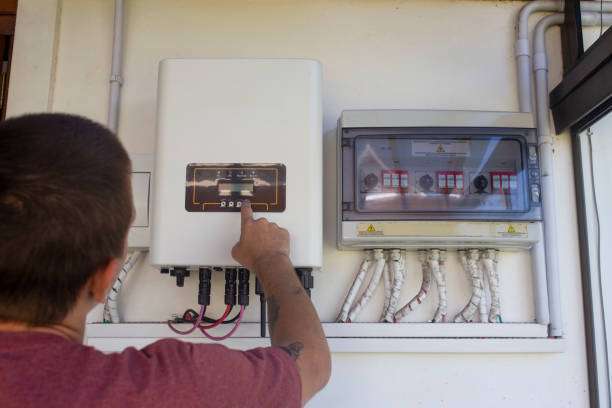
Your solar panels are still sitting on the roof, the Arizona sun is shining, and everything looks perfectly normal.
So why is your electric bill suddenly higher?
The problem might not be your solar panels at all. It could be your inverter, the equipment responsible for converting the electricity your panels generate into power your home can actually use.
When an inverter stops working properly, solar production can drop significantly or stop altogether. And because most homeowners don’t regularly check their solar monitoring app, the problem can go unnoticed for days or even weeks.
In Phoenix, where summer heat puts additional stress on electrical equipment, recognizing inverter problems early can help prevent prolonged downtime and unnecessary repair expenses.
The good news? A malfunctioning solar inverter doesn’t always need to be replaced. Sometimes the issue is a communication error, a faulty connection, or another repairable problem.
Here’s how to recognize the warning signs, understand what’s causing them, and determine when professional solar inverter repair makes sense.
What Are the Warning Signs of a Failing Solar Inverter?
Common signs of solar inverter problems include sudden drops in electricity production, persistent error codes, red warning lights, unusual noises, and monitoring apps showing the system offline. In Phoenix, extreme heat can also cause temporary power reductions or shutdowns. A professional diagnostic can determine whether the inverter needs repair, replacement, or a simple correction elsewhere in the system.
What Does a Solar Inverter Actually Do?
Solar panels generate direct current (DC) electricity, but most household appliances use alternating current (AC).
Your solar inverter converts that DC electricity into usable AC power.
It also helps manage how your solar system interacts with your home’s electrical infrastructure and the utility grid.
Depending on the equipment, your inverter may also provide:
- Solar production monitoring
- Electrical fault detection
- Automatic shutdown during certain unsafe conditions
- Grid voltage and frequency monitoring
- Communication with battery storage equipment
- System performance reporting
In other words, your inverter does considerably more than convert electricity.
It’s one of the most important electrical components in your solar installation.
When it malfunctions, even perfectly healthy solar panels may be unable to deliver their expected energy production.
Can Your Solar Panels Still Work If the Inverter Fails?
Your panels may continue generating DC electricity when exposed to sunlight, but that doesn’t mean your home can use it.
In a typical grid-connected solar system, an inverter failure prevents the affected portion of the array from delivering usable AC electricity.
If your system has one central string inverter, a complete inverter failure can stop production from the entire connected array.
With microinverters, a failure may affect only one panel or a smaller section of the system.
Understanding which equipment you have helps determine how serious the problem may be.
7 Warning Signs Your Solar Inverter Needs Attention
Not every inverter problem causes a complete shutdown.
Some failures reduce production gradually, while others appear suddenly.
1. Your Electric Bill Is Higher Than Expected
For many homeowners, this is the first clue.
Your solar system was installed to offset electricity purchases from the utility. If production falls, you may begin buying more power from APS or SRP.
A higher bill doesn’t automatically mean your inverter is failing. Increased air conditioning use, rate changes, and seasonal production differences can also affect costs.
But if your electricity consumption hasn’t changed significantly and your solar production has dropped, the inverter deserves a closer look.
What to check: Compare your current solar production with previous periods under similar weather conditions.
2. Your Monitoring App Shows Little or No Production
Most modern solar systems include monitoring software that displays energy production.
If your app suddenly shows zero production during a clear, sunny afternoon, something may be wrong.
Possible causes include:
- An inverter shutdown
- A tripped electrical protection device
- A communication failure
- A solar array fault
- A utility-related interruption
However, an app showing your system as offline doesn’t necessarily mean your solar panels have stopped producing electricity.
Sometimes the monitoring gateway has simply lost its internet connection.
Before assuming the inverter has failed, determine whether the problem is with actual energy production or just the reporting system.
3. The Inverter Displays a Red Light or Error Code
Inverters use indicator lights, displays, and monitoring alerts to communicate operating conditions.
Depending on the manufacturer, you might see:
- Red or flashing warning lights
- Fault or alarm notifications
- Grid voltage errors
- Over-temperature warnings
- Ground fault messages
- Arc-fault shutdown alerts
- Communication errors
The meaning of each light or code depends on the specific inverter model.
A red light on one manufacturer’s equipment may indicate a different condition than a similar light on another.
Write down or photograph the exact error code before contacting a technician. It can help narrow the diagnostic process considerably.
4. Solar Production Drops During the Hottest Part of the Day
Phoenix homeowners sometimes notice their solar production falling during extremely hot afternoons.
This can happen for several reasons.
Solar panels naturally produce less efficiently as their cell temperatures rise. Inverters may also reduce their output when internal temperatures become too high.
If an inverter repeatedly overheats, it may temporarily limit production or shut down to protect its components.
A pattern of reduced output during the hottest hours, especially when accompanied by temperature warnings, may point to a cooling or thermal management issue.
5. Your Inverter Makes Unusual Noises
Some inverter noise is normal.
Depending on the design, you may hear a cooling fan, a faint electrical hum, or occasional relay clicks during startup and shutdown.
What deserves attention is a new or unusually loud sound.
Examples include:
- Persistent buzzing or humming
- Grinding or rattling from a cooling fan
- Repeated clicking accompanied by failed startup attempts
- Unusual electrical noises
These symptoms can indicate cooling problems, switching issues, or other equipment faults.
If you hear loud electrical arcing sounds, notice smoke, or smell burning insulation, keep your distance and contact a qualified professional immediately.
6. The System Frequently Shuts Down and Restarts
An inverter that repeatedly disconnects and reconnects may be responding to:
- Excessive internal temperature
- Utility voltage outside its permitted operating range
- Ground or insulation faults
- Arc-fault detection
- Internal component problems
Occasional shutdowns can occur during utility disturbances.
Repeated shutdowns on otherwise normal days deserve investigation.
7. One Panel or Section of Your System Stops Producing
If your system uses microinverters or module-level monitoring, you may notice that one panel consistently produces much less electricity than neighboring panels.
Possible explanations include:
- A failed microinverter
- Panel damage
- Shading
- Wiring or connector problems
- A monitoring issue
With string inverter systems, an electrical problem affecting one string may reduce production from a larger group of panels.
The right repair depends on identifying which component is actually responsible.
Why Solar Inverters Fail in Phoenix
Solar inverters operate in demanding conditions throughout Arizona.
Heat, dust, electrical disturbances, moisture, and normal component aging can all contribute to problems.
Extreme Summer Heat
Phoenix’s prolonged summer heat is one of the most significant environmental challenges for outdoor electrical equipment.
Inverters contain electronic components that generate heat during normal operation.
When outdoor temperatures are already high, that heat becomes harder to dissipate.
An inverter installed on a west-facing wall in direct afternoon sunlight may experience more thermal stress than one mounted in a suitable shaded location.
Likewise, a poorly ventilated garage can become extremely hot during summer.
Heat exposure can accelerate the aging of components such as capacitors, fans, and other electronic assemblies.
Over time, repeated heating and cooling cycles can also contribute to wear.
Dust and Restricted Cooling
Arizona dust storms and everyday airborne debris can affect equipment cooling.
Depending on the inverter design, dust buildup may restrict airflow around vents, fans, or heat-dissipating surfaces.
When the inverter cannot shed heat effectively, internal temperatures may rise and trigger protective operating limits.
Not all inverters use fans or open ventilation paths. Some rely on sealed enclosures and passive cooling.
Maintenance should always follow the manufacturer’s instructions.
Utility Voltage and Electrical Disturbances
Grid-connected solar inverters continuously monitor utility voltage and frequency.
If those values move outside permitted operating limits, the inverter must disconnect or stop exporting electricity as designed.
Possible contributing factors include:
- Utility disturbances
- Local voltage conditions
- Electrical issues within the property’s service equipment
- Voltage rise associated with solar export
- Storm-related electrical events
An inverter reporting a grid fault isn’t necessarily defective.
The issue may originate outside the inverter.
A qualified electrician can evaluate whether the problem involves the utility supply, the home’s electrical system, inverter settings, or equipment failure.
Monsoon Storms and Moisture Intrusion
Phoenix may be known for dry weather, but monsoon storms bring intense rain, wind, dust, and lightning.
Damaged seals, improperly installed conduit fittings, deteriorated wiring, or compromised enclosures can allow moisture to affect electrical equipment.
Moisture-related faults may not appear until after a storm.
If your inverter begins reporting ground faults or insulation errors following heavy rain, have the system professionally inspected.
Age and Normal Component Wear
Inverters don’t necessarily last as long as the solar panels they support.
Many residential string inverters have expected service lives commonly discussed in the range of 10 to 15 years, although actual longevity varies by model, operating conditions, and maintenance.
Some last longer. Others fail earlier.
Microinverters frequently come with longer manufacturer warranties, often 20 to 25 years, but warranty duration should not be confused with a guaranteed operating lifespan.
Age is useful context, but it shouldn’t be the sole reason to replace an inverter.
A 12-year-old inverter with a repairable external fault may still have a reasonable repair option.
A much newer inverter with a failed, nonserviceable internal assembly may require replacement.
The condition of the equipment matters more than its age alone.
How Phoenix Heat Causes Inverter Derating and Shutdowns
One of the most misunderstood solar inverter problems is thermal derating.
What Is Solar Inverter Derating?
Thermal derating occurs when an inverter automatically reduces its power output to keep internal temperatures within safe operating limits.
It’s a protective function, not necessarily a sign that the equipment has permanently failed.
An inverter might operate normally in the morning, reduce output during the hottest afternoon hours, and return to normal as temperatures fall.
If internal temperatures continue rising, some models may temporarily shut down.
At What Temperature Does an Inverter Start Derating?
There isn’t one temperature threshold that applies to every solar inverter.
Some models begin reducing output at relatively moderate ambient temperatures under full load. Others are engineered for higher temperatures or use more advanced cooling systems.
The commonly referenced 113°F figure is not a universal cutoff.
Actual derating depends on:
- Manufacturer and model
- Ambient temperature
- Direct sunlight exposure
- Electrical load
- Cooling design
- Installation clearances
- Equipment condition
The manufacturer’s temperature and power derating specifications are the correct reference.
Can You Prevent Heat-Related Inverter Shutdowns?
You may be able to reduce the risk by ensuring the equipment has appropriate operating conditions.
Useful measures include:
- Maintaining manufacturer-required clearances
- Keeping approved ventilation paths unobstructed
- Addressing failed cooling fans
- Inspecting for excessive dust accumulation
- Evaluating whether the mounting location creates unnecessary heat exposure
Adding shade may help certain installations, but modifications must not interfere with cooling, service access, or manufacturer requirements.
Don’t enclose an inverter or relocate it without professional evaluation.
A technician can determine whether the equipment is operating within its intended temperature range or whether a cooling-related fault needs correction.
Common Solar Inverter Error Codes and What They Mean
The exact wording varies by manufacturer, but most inverter faults fall into recognizable categories.
| Error or warning | What it may indicate | Recommended action |
| Over-temperature | Excessive internal heat or cooling problems | Check for visible obstructions and schedule service if recurring |
| Grid voltage or frequency | Utility or electrical conditions outside permitted limits | Record the alert and have repeated faults evaluated |
| Ground or isolation fault | Damaged insulation, moisture, or electrical leakage | Contact a qualified solar electrician |
| Arc-fault or AFCI | Possible electrical arcing or connection problem | Do not repeatedly reset; arrange professional inspection |
| Communication offline | Internet, gateway, or monitoring connection failure | Check app and network status before assuming production has stopped |
| DC input fault | Possible panel string, wiring, or inverter input issue | Schedule electrical diagnostics |
| Internal hardware fault | Potential inverter component failure | Contact a qualified service provider or manufacturer |
Why You Shouldn’t Repeatedly Reset an Inverter
Some inverter faults clear automatically when normal operating conditions return.
Others indicate electrical safety problems.
Repeatedly resetting an inverter without understanding the error can expose damaged equipment to further stress or bypass the opportunity to identify a hazardous condition.
This is especially important with ground faults and arc-fault alerts.
If a safety-related fault keeps returning, stop troubleshooting through repeated resets and contact a qualified technician.
String Inverters vs. Microinverters: How Repairs Differ
The type of inverter installed on your home affects both the symptoms you’ll notice and the repair process.
String Inverters
A string inverter is typically a larger unit mounted on an exterior wall, in a garage, or another approved location.
It converts electricity from one or more connected groups of solar panels.
Advantages for troubleshooting:
- Equipment is often accessible without climbing onto the roof.
- Diagnostic information may be available directly from the inverter.
- Some external components can be serviced independently.
Potential challenges:
- A complete inverter failure may stop production from the entire connected array.
- Older models may have limited replacement parts.
- Replacement equipment must be compatible with the existing solar system.
Microinverters
Microinverters are installed at individual solar panels, typically underneath the modules.
Each microinverter converts DC electricity into AC electricity at the panel level.
Advantages for troubleshooting:
- Monitoring may identify problems at individual panels.
- A single failed microinverter may affect only one panel.
- Other panels may continue operating normally.
Potential challenges:
- Replacing a failed unit generally requires roof access.
- Roof tile removal and replacement may be necessary.
- Compatible replacement models and monitoring components must be considered.
Which Type Is More Reliable in Arizona Heat?
Both technologies can perform reliably in Phoenix when properly designed and installed.
String inverters are affected by their mounting environment, ventilation, and electrical load.
Microinverters operate beneath solar panels, where rooftop temperatures can be substantial.
Reliability depends on the specific product, installation quality, operating conditions, and manufacturer design.
Neither technology is automatically immune to heat-related failures.
What to Check Before Calling a Solar Inverter Repair Technician
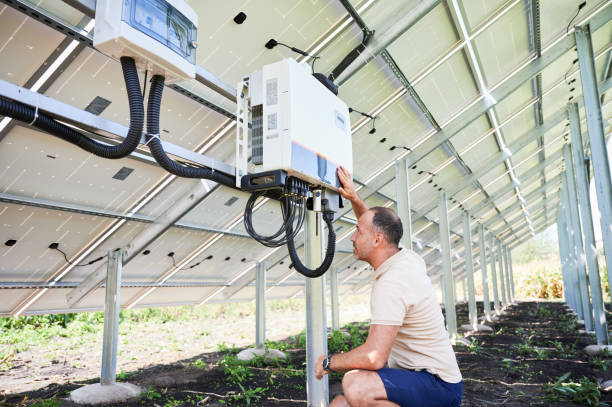
If your solar production suddenly drops, there are a few useful checks you can perform without opening electrical equipment.
1. Check Your Monitoring App
Look for:
- Current solar production
- Recent production history
- Error messages
- The time the system stopped reporting
- Whether the entire system or only certain panels are affected
Take screenshots of anything unusual.
2. Check the Inverter’s Visible Status
If the inverter has an accessible display or indicator lights, note what they’re showing.
Record the exact fault message or code.
Don’t remove covers or open the enclosure.
3. Look for a Monitoring Connection Problem
If your app says the system is offline, check whether your home’s internet connection is working.
Some monitoring gateways rely on Wi-Fi or a separate communication device.
A lost connection may interrupt reporting without stopping solar production.
4. Observe the Time of Day
Does production drop only during extremely hot afternoons?
Does the system recover after sunset or the following morning?
Does the problem appear after storms?
These details can help identify thermal, grid-related, or moisture-related issues.
5. Visually Check for Obvious Problems
From a safe location, look for:
- Visible damage to the inverter enclosure
- Blocked external ventilation openings
- Water intrusion or staining
- Unusual warning lights
- Signs of overheating
Don’t touch damaged wiring, open equipment, or attempt repairs.
6. Check Breaker and Disconnect Status Without Operating Them
If your solar breaker or disconnect is clearly labeled and safely visible, note its position.
A tripped breaker can indicate an electrical problem.
Don’t repeatedly reset a tripped solar breaker or operate unfamiliar disconnects. If something has tripped or appears damaged, have a qualified electrician investigate.
When to Stop Troubleshooting
Schedule professional service if:
- The inverter remains offline during multiple clear days.
- Error codes continue returning.
- Solar production has dropped significantly without an obvious explanation.
- You notice abnormal sounds, overheating, or visible damage.
- A breaker repeatedly trips.
- The inverter reports ground or arc faults.
These symptoms require more than a monitoring app check.
Can a Solar Inverter Be Repaired, or Does It Need Replacement?
This is one of the most common questions homeowners ask when their solar system stops working.
And it’s an important one because replacing an inverter can be a significant expense.
The right answer depends on the fault, equipment age, warranty status, parts availability, and compatibility with the rest of the solar installation.
When Repair Makes Sense
Repair may be the better option when:
- The inverter is relatively new.
- The equipment is still under warranty.
- The problem involves external wiring or electrical connections.
- A communication gateway or monitoring component has failed.
- A manufacturer-approved cooling fan or other serviceable part needs replacement.
- A supported firmware or configuration issue can be corrected.
- Replacement parts are available and the repair is economically reasonable.
Some inverter manufacturers allow specific components to be replaced in the field.
Others require complete unit replacement for internal failures.
A technician should confirm the manufacturer’s service requirements before recommending component-level work.
When Replacement Is the Better Investment
Replacement may make more sense when:
- The inverter has reached an advanced age and is out of warranty.
- Internal power electronics have failed.
- Replacement parts are unavailable.
- The same fault keeps returning.
- Repair costs approach the cost of a compatible new inverter.
- The manufacturer no longer supports the model.
- The existing equipment cannot meet your future system requirements.
For older string inverters, particularly those around 10 to 15 years old, replacement may be worth considering.
But age alone isn’t a diagnosis.
Solar Inverter Repair vs. Replacement
| Factor | Repair may be preferable | Replacement may be preferable |
| Equipment age | Newer or midlife unit | Older unit near expected service life |
| Warranty | Covered repair or service | Warranty replacement or expired coverage with major failure |
| Type of fault | External or serviceable component | Nonserviceable internal failure |
| Parts availability | Compatible parts readily available | Parts discontinued or unavailable |
| Repair history | First isolated issue | Repeated failures |
| Cost | Repair is substantially less expensive | Repair approaches replacement cost |
| Future plans | Existing features meet your needs | New equipment needed for planned upgrades |
At Watt Masters, we believe the right approach is to diagnose the problem first and replace equipment only when there’s a good reason to do so.
A homeowner shouldn’t have to purchase an entirely new solar system because one component has failed.
How Much Does Solar Inverter Repair Cost in Phoenix?
Costs vary considerably depending on the equipment and the problem.
A communication issue or minor external electrical repair may be relatively straightforward.
Replacing a failed string inverter or accessing microinverters beneath a tile roof is typically more involved.
The final cost can depend on:
- Diagnostic labor
- Inverter manufacturer and model
- Warranty coverage
- Availability of replacement parts
- Roof access requirements
- Electrical modifications
- Monitoring compatibility
- Permit and utility requirements, when applicable
A roof-mounted microinverter replacement may involve removing and reinstalling solar panels, working around fragile tile, and ensuring the roof remains properly sealed.
A string inverter replacement may involve confirming the existing array’s electrical characteristics, matching equipment specifications, and addressing any required code updates.
Rather than relying on a generic repair price, request a diagnosis that identifies the failed component and explains the available options.
A useful estimate should distinguish between the cost of diagnosing the issue, repairing it, and replacing equipment if necessary.
Can You Replace an Old Solar Inverter Without Replacing the Panels?
In many cases, yes.
Solar panels commonly remain productive for decades, while inverters may require service or replacement earlier.
If the panels and associated wiring are in good condition, a compatible inverter may allow you to continue using the existing array.
However, replacement isn’t always as simple as swapping one box for another.
A qualified installer needs to evaluate:
- Solar array voltage and current
- String configuration
- Inverter capacity
- Rapid shutdown requirements
- Existing electrical equipment
- Monitoring compatibility
- Applicable electrical codes
- Utility interconnection requirements
Some older solar systems require additional modifications to accommodate newer inverter technology.
Those details should be evaluated before equipment is ordered.
Can You Add a Solar Battery When Replacing an Inverter?
Possibly.
An inverter replacement can be a convenient time to explore battery storage, particularly if you’re interested in backup power during outages or reducing electricity purchases during certain utility rate periods.
But a new inverter doesn’t automatically make your system battery-compatible.
Depending on the design, battery integration may require:
- A compatible hybrid inverter
- An AC-coupled battery system
- Additional electrical equipment
- A backup gateway or transfer equipment
- A critical-loads panel
- Permits and utility approval
Battery compatibility, available backup power, and overall cost should be evaluated as part of the system design.
And remember, a standard grid-connected solar system without suitable backup equipment generally shuts down during a utility outage, even when the sun is shining.
What If Your Original Solar Installer Is Out of Business?
Unfortunately, many Phoenix homeowners have experienced this situation.
Their solar system develops a problem, but the company that installed it is no longer operating or no longer provides service.
That can leave homeowners wondering who will honor the warranty or repair the equipment.
The good news is that you may not need the original installer to get your system working again.
An experienced solar electrical contractor may be able to:
- Diagnose inverter faults
- Inspect the existing wiring and electrical equipment
- Identify compatible replacement components
- Help determine available manufacturer warranty options
- Repair or replace supported equipment
- Restore or troubleshoot monitoring access where possible
Some manufacturers require authorized service providers or specific installer credentials for warranty work and advanced software access.
Those restrictions should be confirmed before repairs begin.
Watt Masters works on existing solar systems, including systems installed by other companies. Our focus is identifying the actual electrical problem and determining a practical path forward.
Why Professional Solar Inverter Diagnostics Matter
Solar inverters are connected to high-voltage electrical systems.
Even after a system has been disconnected from the utility grid, dangerous voltages may remain present in certain components.
Attempting to open an inverter, modify internal wiring, or replace electrical components without appropriate training can cause serious injury or equipment damage.
Professional diagnostics go beyond reading an error code.
What a Solar Inverter Inspection May Include
Depending on the symptoms and system design, a qualified technician may:
- Review inverter fault history and monitoring data.
- Check AC and DC electrical conditions using appropriate testing procedures.
- Inspect accessible wiring, connectors, and protective equipment.
- Evaluate inverter temperature and cooling performance.
- Check utility voltage conditions when relevant.
- Investigate ground faults or arc-fault alerts.
- Confirm communication and monitoring operation.
- Assess whether other solar components are contributing to the problem.
- Determine whether repair or replacement is appropriate.
The objective is to identify the cause, not simply clear the warning message.
Why Electrical Experience Makes a Difference
An inverter fault can originate outside the inverter itself.
Damaged wiring, an improperly terminated connection, voltage problems, or a fault elsewhere in the array can all produce symptoms that resemble equipment failure.
Replacing the inverter without identifying those conditions may leave the original problem unresolved.
That’s why a thorough electrical diagnosis matters.
How to Reduce the Risk of Future Inverter Problems
No maintenance routine can prevent every equipment failure.
But a few practical steps can help homeowners recognize issues early and maintain appropriate operating conditions.
Monitor Production Regularly
Check your solar monitoring app periodically rather than waiting for a higher electricity bill.
Look for unusual changes in production and recurring alerts.
Keep Equipment Clearances Unobstructed
Don’t store boxes, tools, or other items against your inverter if they interfere with required ventilation or access.
Follow the manufacturer’s installation and maintenance recommendations.
Address Small Problems Before They Become Larger
A recurring warning message shouldn’t be ignored simply because the system eventually restarts.
The underlying issue may become more disruptive over time.
Schedule an Inspection When Performance Changes
If production declines unexpectedly, have the system evaluated.
A technician can determine whether the issue involves the inverter, solar panels, wiring, or another component.
Review Your System as It Ages
If your solar system has been operating for 10 years or longer, it may be worth reviewing inverter condition, warranty status, and replacement availability.
Planning ahead can make an eventual equipment failure less disruptive.
Solar Inverter Repair in Phoenix: Why Homeowners Choose Watt Masters
When your solar system stops producing, you don’t need another sales pitch about the benefits of solar.
You already made that investment.
What you need is someone who can identify the problem, explain your options, and help get your system working again.
Watt Masters has served Arizona since 1999, bringing decades of electrical contracting and solar experience to residential and commercial systems.
Our electrical-first approach helps us evaluate the complete system, not just the equipment displaying an error code.
We provide solar troubleshooting and repair services throughout Phoenix and surrounding Valley communities, including Scottsdale, Mesa, Chandler, and Glendale.
From inverter failures and monitoring problems to electrical faults and aging equipment, our goal is to recommend repairs that make sense for your existing system.
Diagnose first. Repair when practical. Replace only when necessary.
Get Your Solar System Producing Again
A failing solar inverter can quietly reduce your system’s production and leave you purchasing more electricity than expected.
But an error code or shutdown doesn’t automatically mean your inverter is beyond repair.
The right solution starts with finding out what’s actually wrong.
If your inverter is displaying warning lights, reporting faults, making unusual noises, or producing less electricity than expected, Watt Masters can help evaluate the problem.
Need solar inverter repair in Phoenix?
Contact Watt Masters to schedule a solar system diagnostic and get clear recommendations for restoring your system’s performance.
Frequently Asked Questions About Solar Inverter Problems
Common warning signs include sudden production drops, persistent error codes, red warning lights, repeated shutdowns, and unusual noises. A monitoring app showing the system offline can also indicate a problem, although communication failures don’t always mean the inverter has stopped producing electricity.
A red light often indicates a fault or warning condition, but its exact meaning depends on the manufacturer and model. Check the accompanying error code or user manual and contact a qualified technician if the fault persists.
Yes, in some cases. External wiring faults, communication problems, serviceable cooling components, and certain manufacturer-supported repairs may be resolved without replacing the entire inverter. Major internal failures may require replacement.
Many residential string inverters have expected service lives around 10 to 15 years, although some last longer. Microinverters often have longer warranties. Actual lifespan depends on the equipment, installation conditions, heat exposure, and other factors.
Yes. Excessive heat can cause an inverter to reduce output or temporarily shut down to protect its internal components. Repeated heat exposure can also contribute to long-term component aging.
Thermal derating is an automatic reduction in inverter output when internal temperatures approach the equipment’s operating limits. It helps protect components from overheating and may reverse when temperatures decrease.
Possible causes include excessive internal temperature, grid voltage conditions, electrical faults, or system operating limits. A technician can review fault history and operating data to determine the cause.
No. Some errors indicate utility disturbances, communication problems, or faults elsewhere in the solar installation. The code identifies a condition that needs investigation, not necessarily a failed inverter.
The monitoring gateway may have lost its internet connection, or the inverter may have stopped communicating. In some cases, the system continues producing electricity even though the app cannot display current data.
Follow the manufacturer’s instructions and avoid operating unfamiliar electrical equipment. Don’t repeatedly reset a system reporting ground faults, arc faults, or other safety-related warnings. Persistent faults require professional evaluation.
It depends on the fault, warranty, parts availability, and repair cost. A 10-year-old inverter doesn’t automatically need replacement, but a major internal failure may make replacement more economical.
Often, yes. If the existing panels and wiring are in good condition, a compatible replacement inverter may allow you to continue using the original array. Electrical specifications and current installation requirements must be evaluated first.
Yes. If the inverter reduces or stops solar production, your home may purchase more electricity from the utility. However, changes in household consumption and utility rates can also increase bills.
A string inverter converts electricity from groups of solar panels using a centralized unit. Microinverters convert electricity at individual panels. A failed string inverter may affect an entire array, while a single failed microinverter generally affects a smaller portion of the system.
Yes. Electrical surges, moisture intrusion, wind-related wiring damage, and other storm conditions can affect inverter operation. If faults appear after a storm, have the equipment professionally inspected.
Possibly. Some replacement inverters support compatible battery storage, while other systems require additional equipment or an AC-coupled battery configuration. A professional assessment can determine the available options.
A qualified solar electrical contractor may be able to diagnose and repair the existing system. Warranty coverage and certain advanced repairs may depend on manufacturer authorization and equipment support.
Yes. Watt Masters evaluates existing solar systems, including installations completed by other contractors. Repair options depend on the inverter model, fault condition, parts availability, and manufacturer service requirements.