You’ve already invested in solar panels. They’re producing electricity, helping offset your utility bills, and making good use of all that Arizona sunshine.
But there’s one thing your panels may not do: keep your home powered when the grid goes down.
That’s a frustrating realization for homeowners who assumed having solar meant having backup power. It’s especially concerning during Phoenix’s summer monsoons, when a power outage can leave you without air conditioning in triple-digit heat.
Adding a solar battery can change that. It can also help you use more of the electricity your panels produce instead of sending it back to the utility.
The key is choosing the right battery, understanding your APS or SRP rate plan, and making sure the new equipment works with your existing system.
Can You Add a Battery to an Existing Solar System?
Yes, you can add battery storage to most existing residential solar systems without replacing the solar panels. An AC-coupled battery can often work alongside your current inverter, while other installations may benefit from a hybrid inverter. The best option depends on your equipment, electrical panel, energy usage, and backup power goals.
For Phoenix homeowners, there’s another consideration: Arizona’s extreme heat. Battery placement, cooling requirements, and the amount of electricity needed for air conditioning can make a significant difference in how well the system performs.
Why Your Existing Solar Panels May Not Be Enough
Solar panels generate electricity. Batteries store it.
That distinction matters more than many homeowners realize.
Why Most Solar Systems Shut Down During a Power Outage
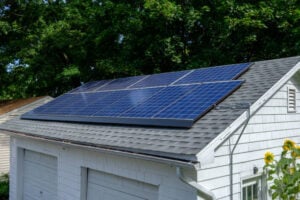
Most residential solar systems in Phoenix are grid-tied. They’re designed to operate alongside the utility grid, sending electricity to your home and, when permitted, exporting excess production.
When the grid loses power, a standard grid-tied inverter automatically shuts down. This prevents electricity from feeding into utility lines while crews may be working to restore service.
It’s an essential safety feature.
Unfortunately, it also means your rooftop panels typically won’t keep your refrigerator, lights, or air conditioner running during an outage, even if the sun is shining.
Some specially designed systems can provide limited daytime backup without batteries, but that’s not how most conventional grid-tied installations operate.
Why Backup Power Matters in Phoenix
Imagine a July afternoon. It’s 112°F outside, a monsoon storm moves through, and the neighborhood loses power.
Your panels might be capable of generating plenty of electricity, but without properly configured backup equipment, your home still goes dark.
A solar battery system can provide an alternative source of power for selected household circuits or, with sufficient capacity and compatible equipment, much of the home.
That can help keep essentials running, including:
- Refrigerators and freezers
- Lights and ceiling fans
- Internet equipment and phone chargers
- Medical equipment, when properly accounted for in the backup design
- Selected cooling equipment
- Other important household circuits
The important question isn’t simply whether you can add a battery.
It’s what you want the battery to do when you need it most.
Three Things to Check Before Adding Battery Storage
1. Is Your Existing Solar Inverter Compatible?
Your inverter converts the direct current (DC) generated by solar panels into alternating current (AC) used by your home.
When adding battery storage, there are two common approaches.
AC-coupled battery storage
An AC-coupled battery has its own power conversion equipment and can often be installed alongside your existing solar inverter.
This makes it an attractive option for homeowners who already have a functioning solar system and don’t want to replace equipment unnecessarily.
However, compatibility still matters. The battery, gateway, inverter, and control equipment must work together properly, especially if you expect your panels to recharge the battery during an outage.
DC-coupled battery storage
A DC-coupled system uses compatible equipment to manage solar generation and battery charging on the DC side, often through a hybrid inverter.
This may be worth considering if your existing inverter is nearing replacement, has already failed, or was designed to accommodate batteries.
Neither approach is automatically better for every home.
A qualified solar battery installer should identify your existing inverter model, age, warranty status, and electrical configuration before recommending a retrofit.
2. Can the Battery Handle Phoenix’s Heat?
Battery performance and longevity depend partly on operating temperature.
That’s particularly important in the Valley, where outdoor temperatures routinely exceed 110°F during summer.
Lithium iron phosphate (LFP) batteries have become popular for residential energy storage because of their thermal stability and long cycle life compared with some other lithium-ion chemistries.
LFP is itself a type of lithium-ion battery, so the important comparison is between different lithium-ion chemistries, not lithium-ion versus LFP.
Even with LFP, heat management matters.
A battery installed on an exposed west-facing wall can experience a very different environment from one mounted inside a suitable garage.
We’ll cover placement in more detail below.
3. What Do APS, SRP, and Local Permitting Require?
Adding a battery involves more than mounting equipment on the wall.
Depending on the system, the project may require:
- Electrical permits
- An updated electrical diagram
- Utility interconnection review or approval
- Battery disconnects and safety equipment
- Backup load panel modifications
- Electrical panel upgrades
- Inspections
- Equipment commissioning
Existing solar ownership, interconnection agreements, and utility rate plans also need to be reviewed.
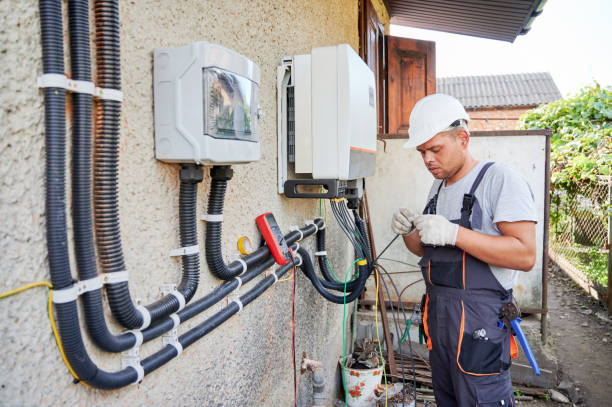
This is one reason it’s valuable to work with an experienced Phoenix electrical contractor rather than treating a battery retrofit as a simple plug-in accessory.
When Does Adding a Solar Battery Make Financial Sense in Phoenix?
A battery can provide backup power, help reduce electricity purchases during expensive hours, or both.
But it isn’t an automatic money saver.
The financial benefit depends heavily on your utility company, current rate plan, solar export credits, and how much electricity your household uses after sunset.
APS Customers: Compare What You Earn With What You Pay
Arizona Public Service (APS) uses different compensation arrangements depending on when a solar system was interconnected and the customer’s applicable rate agreement.
Many newer systems receive a dollar credit for exported solar electricity through the Resource Comparison Proxy (RCP) program rather than a full retail kilowatt-hour credit.
That creates an opportunity for battery storage.
Instead of exporting excess solar electricity during the afternoon, you can store some of it and use it later when purchasing electricity from APS may cost more.
For example, consider a hypothetical household where:
- Exported solar earns 6 cents per kilowatt-hour.
- Electricity purchased during a particular evening period costs 15 cents per kilowatt-hour.
- A battery delivers 90% of the energy stored in it.
Storing 10 kWh of excess solar could provide approximately 9 kWh of usable electricity later. At 15 cents per kWh, that’s $1.35 in avoided purchases, compared with 60 cents in foregone export credits.
The difference is 75 cents for that charging cycle, before considering battery wear, additional charges, and other factors.
It’s a simple example, but it illustrates why the relationship between export credits and retail electricity prices matters.
What if you have an older APS solar agreement?
Some homeowners still receive grandfathered net-metering benefits. If your existing arrangement already gives you favorable credit for excess solar production, a battery may provide less additional bill savings.
In that situation, backup power could be the primary reason to invest.
Before making changes, confirm your existing rate and export agreement. You don’t want to give up valuable grandfathered benefits without understanding the consequences.
SRP Customers: Battery Storage Can Help Shift Energy Use
Salt River Project (SRP) has several residential solar rate plans, including options with demand charges, time-of-use pricing, and export compensation.
On certain export plans, excess solar generation receives a fixed credit of approximately 3.45 cents per kilowatt-hour.
That’s considerably less than the cost of purchasing electricity during many peak periods.
For homeowners on those plans, storing afternoon production for evening use can be attractive.
Other SRP plans work differently. Demand-based plans, for example, may reward careful management of short periods of high electricity use.
A battery can potentially help reduce those peaks, but only if its controls and capacity are configured for that purpose.
An important 2026 consideration: SRP has announced changes to several older residential rate plans, with certain plans scheduled for discontinuation by November 2029. However, not every existing solar customer is affected in the same way.
Your specific plan matters more than a general statement about SRP solar rates.
When a Battery May Not Be Worth the Cost
Battery storage isn’t the right investment for every solar homeowner.
It may be less financially attractive when:
- You receive favorable grandfathered solar export credits.
- Your evening electricity consumption is relatively low.
- Your rate plan offers little benefit from shifting energy use.
- You rarely experience outages and don’t need backup power.
- Your installation requires unusually expensive electrical modifications.
- The expected bill savings don’t justify the installed cost.
There’s nothing wrong with deciding to keep a well-performing solar system exactly as it is.
At Watt Masters, the goal is to design around your actual needs, not convince you that every solar installation needs more equipment.
How Much Does It Cost to Add a Solar Battery in Phoenix in 2026?
For budgeting purposes, adding battery storage to an existing Phoenix-area solar system can cost roughly $11,000 to $18,000 for a typical single-battery installation. Larger systems with multiple batteries, extensive electrical modifications, or whole-home backup capabilities can cost substantially more.
These are preliminary planning ranges, not guaranteed local quotes.
| Battery installation | Approximate usable storage | Estimated installed cost |
| Single battery, essential-load backup | 10 to 13.6 kWh | $11,000 to $16,500 |
| Multi-module Enphase battery configuration | 10 to 15 kWh | $11,000 to $18,000 |
| Larger multi-battery system | 20 to 40 kWh | $20,000 to $40,000+ |
| Electrical panel upgrade, if needed | Not applicable | Additional $1,500 to $4,000 |
| Critical-load subpanel, if needed | Not applicable | Additional $500 to $1,500 |
Actual pricing depends on the manufacturer, model, power output, usable capacity, installation location, permits, and electrical work involved.
What Makes One Battery Retrofit More Expensive Than Another?
Two homes with similar solar arrays can receive very different installation quotes.
Common cost factors include:
- Existing inverter compatibility: Keeping a compatible, functioning inverter may reduce unnecessary replacement work.
- Electrical panel condition: Older or crowded panels may require modifications.
- Battery location: Long wiring runs, difficult access, or additional protection can increase labor.
- Backup configuration: Whole-home backup generally requires more equipment and careful load management.
- Number of batteries: Additional capacity increases equipment costs.
- System age: Older solar equipment may need additional troubleshooting or upgrades.
- Permitting and utility requirements: The scope of electrical changes can affect engineering, documentation, and inspection costs.
For an Enphase microinverter system, for example, an appropriately designed AC-coupled battery may allow the homeowner to retain the existing microinverters rather than replacing the solar conversion equipment.
That’s exactly why a site assessment should come before an equipment recommendation.
Is the 30% Federal Solar Battery Tax Credit Still Available in 2026?
No. The federal Residential Clean Energy Credit under Section 25D ended for qualifying expenditures after December 31, 2025.
That means homeowners planning a typical, personally owned battery installation in 2026 should not assume they’ll receive the previously available 30% federal residential tax credit.
Some third-party ownership and commercial arrangements operate under different tax provisions, but those should be evaluated separately.
If a contractor is still advertising a 30% federal residential battery credit for a new 2026 installation, ask them to explain the specific legal basis for that claim.
Always confirm tax eligibility with a qualified tax professional.
Are There APS or SRP Battery Incentives?
Utility programs may provide additional financial value through bill credits, export arrangements, or programs that compensate participating customers for making stored energy available under specified conditions.
However, programs, enrollment limits, compensation, and eligibility can change.
Some arrangements may require allowing the utility or an approved program operator to dispatch a portion of your battery’s stored energy.
Before enrolling, ask:
- How much compensation will I receive?
- How often can the battery be dispatched?
- Can I reserve capacity for emergencies?
- What happens during a grid outage?
- Is there a contract commitment?
- Can I withdraw from the program?
A battery should make sense for your household even after you understand the conditions attached to any incentives.
How Much Backup Power Do You Really Need During a Phoenix Summer?
This is where battery sizing becomes especially important.
A 13.5 kWh battery sounds substantial, and for essential household circuits, it can be.
But Phoenix homes have one major electrical load that changes the equation: air conditioning.
How Long Will a 13.5 kWh Solar Battery Last?
Battery runtime depends on how much electricity your home is consuming at any given moment.
For illustration, assume a 13.5 kWh battery has approximately 12 kWh available for the loads you’re trying to support after accounting for reserve settings and operating losses.
| Average electrical load | Approximate backup runtime |
| 300 watts | 40 hours |
| 500 watts | 24 hours |
| 1,000 watts | 12 hours |
| 2,000 watts | 6 hours |
| 4,000 watts | 3 hours |
These are simplified estimates. Actual results depend on battery settings, equipment efficiency, temperature, appliance cycling, and the battery’s available power output.
Also remember that battery capacity and battery power are different.
Capacity, measured in kilowatt-hours (kWh), determines how much energy is stored.
Power, measured in kilowatts (kW), determines how much equipment the battery can operate at once.
A battery may have enough stored energy for an appliance but still lack the power needed to start or operate it.
Can One Solar Battery Run Central Air Conditioning?
Possibly, but not necessarily for long.
A central air conditioner can draw several kilowatts while running, and its startup requirements may be substantially higher.
During a Phoenix summer, when the outdoor temperature remains high well after sunset, air conditioning can quickly consume stored energy.
If cooling is essential during an outage, your installer should evaluate:
- Air conditioner running wattage
- Compressor startup requirements
- Battery continuous and surge output
- Home insulation and cooling demand
- Expected outage duration
- Whether a soft-start device or other compatible equipment would help
- Whether a smaller cooling zone could be backed up instead
A single battery may be appropriate for essential circuits and limited cooling, while whole-home backup with central AC often requires multiple batteries or significant load management.
Critical-Load Backup vs. Whole-Home Backup
For many Phoenix homeowners, a critical-load backup system is the more practical choice.
Instead of powering everything, the battery supplies selected circuits that matter most during an outage.
These might include:
- Refrigerator and freezer
- Internet and communications
- Lighting
- Medical equipment
- Garage door opener
- Ceiling fans
- A selected cooling system
High-consumption equipment, such as electric dryers, ovens, pool pumps, and Level 2 EV chargers, can remain outside the backup circuits unless the system is specifically sized to accommodate them.
Whole-home backup offers greater flexibility, but it typically requires more battery capacity, higher power output, and a larger investment.
The best battery isn’t necessarily the biggest one. It’s the one sized around what your family actually needs.
Can Solar Panels Recharge the Battery During an Outage?
Yes, with a properly designed and compatible solar-plus-storage system.
However, this capability shouldn’t be assumed simply because a battery has been connected to an existing solar array.
The equipment must be capable of isolating the home from the grid and managing solar production while operating in backup mode.
Some older inverters may shut down or behave differently during an outage unless they’re integrated with compatible control equipment.
Before purchasing a battery, specifically ask whether your existing panels will recharge it when utility power is unavailable.
That feature can make a meaningful difference during a prolonged outage.
AC-Coupled vs. Hybrid Inverter: Which Is Better for an Existing Solar System?
The right retrofit depends on the equipment you already own.
| Retrofit option | Best suited for | Main consideration |
| AC-coupled battery | Working solar systems with compatible string inverters or microinverters | Often preserves existing solar equipment, but adds conversion losses |
| Hybrid inverter replacement | Older or failing inverters, or systems being substantially upgraded | More installation work, but may improve integration and efficiency |
| Existing battery-ready hybrid inverter | Solar systems originally designed for future storage | Potentially simpler installation if the battery is manufacturer-approved |
Why AC-Coupled Batteries Are Popular for Retrofits
For a homeowner with a functioning solar array, keeping the original inverter often makes sense.
An AC-coupled battery can operate alongside the existing solar equipment, avoiding unnecessary changes to the rooftop array.
This can be especially useful for Enphase microinverter installations and older systems that were not originally designed with storage in mind.
However, don’t assume every AC-coupled battery works with every inverter. Compatibility, backup operation, commissioning, and manufacturer requirements still need to be verified.
When Replacing the Inverter Makes Sense
If your existing inverter is already failing, approaching the end of its expected service life, or incompatible with the storage capabilities you want, upgrading to a hybrid inverter may be worth considering.
The decision should account for both immediate installation costs and the long-term condition of the existing equipment.
A properly planned retrofit can avoid paying for equipment twice.
Where Should a Solar Battery Be Installed in Phoenix?
Battery placement deserves more attention in Arizona than it does in many other parts of the country.
Summer heat can affect charging performance, battery efficiency, and long-term durability.
Even batteries with active thermal management have manufacturer-defined operating limits.
Garage Installation
A garage can be a practical location when the equipment is approved for installation there and required safety clearances can be maintained.
Advantages may include:
- Protection from direct sunlight
- Convenient access for servicing
- Shorter wiring runs on some properties
- Less exposure to outdoor weather
However, Phoenix garages can become extremely hot, particularly when uninsulated or exposed to afternoon sun.
A garage isn’t automatically a temperature-controlled environment.
Exterior Wall Installation
Some battery systems are approved for outdoor installation.
A shaded north-facing or east-facing wall may offer a better thermal environment than an exposed west-facing wall.
The exact location depends on equipment ratings, required clearances, accessibility, and local codes.
Locations That May Create Problems
Be cautious about placing batteries in:
- Unventilated sheds
- Extremely hot attics
- Areas exposed to prolonged direct sunlight
- Locations subject to flooding or water accumulation
- Spaces that block required electrical working clearances
- Areas prohibited by the manufacturer’s installation instructions or applicable fire codes
A qualified installer should consider more than where the battery looks best.
The installation location needs to work for the equipment, the home, and the people who may eventually need to service it.
What Does the Solar Battery Installation Process Look Like?
Adding a battery to existing solar panels requires planning, but the actual installation is often relatively straightforward once the design and approvals are complete.
Here’s what Phoenix homeowners should expect.
Step 1: Evaluate Your Existing Solar System
The process starts with understanding what you already have.
A thorough assessment should include:
- Solar array size and production
- Inverter manufacturer and model
- Existing monitoring equipment
- Electrical panel capacity and condition
- Current utility rate plan
- Available battery installation locations
- Household electricity consumption
- Desired backup circuits
- Existing equipment warranties
Your installer should also verify that the solar system is operating properly.
Adding a battery to a malfunctioning solar installation won’t solve the underlying problem.
Step 2: Determine Your Backup and Savings Goals
Some homeowners primarily want protection against outages.
Others want to store excess afternoon solar energy for use during expensive evening hours.
Many want both.
These goals affect battery sizing, equipment selection, and operating settings.
For example, a household focused on emergency backup may maintain a higher battery reserve. A homeowner focused on daily savings may allow more frequent charging and discharging.
There’s no universal setting that’s best for everyone.
Step 3: Design the Electrical Integration
Once the goals are clear, the installer designs how the battery will connect to the existing system.
This may include:
- Battery and inverter selection
- Backup gateway or transfer equipment
- Electrical disconnects
- Critical-load subpanel
- Wiring and conduit
- Equipment protection
- Monitoring and controls
- Utility interconnection documentation
A properly engineered system also accounts for safe isolation from the utility grid during an outage.
Step 4: Obtain Permits and Utility Approval
Battery storage is new electrical work, even when the solar panels were installed years ago.
Depending on the property, approvals may involve the City of Phoenix, Mesa, Scottsdale, Chandler, Glendale, or another local authority.
APS or SRP may also require an updated interconnection application or amendment.
A typical project can involve electrical drawings, permit review, utility documentation, inspections, and final authorization.
Step 5: Install and Commission the Battery
Once equipment and required approvals are in place, many residential battery retrofits can be physically installed in approximately one to two days.
More complex installations can take longer, especially if electrical panel modifications or extensive wiring are necessary.
After installation, the system must be inspected and commissioned according to applicable requirements.
Commissioning should verify:
- Proper charging and discharging
- Monitoring functionality
- Backup transfer operation
- Correct battery reserve settings
- Solar production during normal operation
- Compatible solar charging during outages, when supported
- Safe system shutdown
A battery that looks good on the wall isn’t enough. It needs to operate correctly under real conditions.
Step 6: Understand Your Monitoring and Long-Term Support
Modern battery systems typically include software that lets homeowners monitor energy production, battery charge, household consumption, and grid interaction.
Depending on the equipment, you may be able to adjust backup reserves, operating schedules, and other settings.
Make sure you receive your own monitoring access and understand the basic controls.
You should also know who to contact if the battery stops communicating or the system develops a fault.
How Long Does It Take to Add a Battery to Existing Solar Panels?
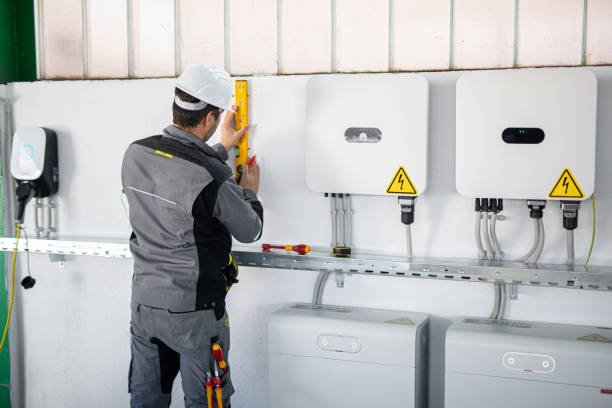
The installation itself may take only a day or two, but the full project usually takes longer.
A reasonable planning expectation is several weeks from initial assessment through design, permits, utility review, installation, and final approval.
Projects requiring substantial electrical upgrades, unusual equipment, or additional review may take longer.
Don’t confuse installation time with the entire project timeline.
Will Adding a Battery Affect Your Existing Solar Warranty or Utility Agreement?
Possibly, which is why this needs to be addressed before work begins.
Your existing solar system may have separate warranties for:
- Solar panels
- Inverters
- Microinverters
- Power optimizers
- Installation workmanship
- Roof penetrations
- Monitoring equipment
A battery retrofit doesn’t automatically void every existing warranty.
However, modifications made outside manufacturer requirements or the terms of an applicable warranty can create coverage issues.
Ask your installer to identify the existing equipment and explain how the proposed retrofit affects it.
Protecting Grandfathered APS or SRP Benefits
Adding storage also doesn’t automatically mean losing an existing utility rate arrangement.
But you should never assume your current agreement will remain unchanged.
Before proceeding, have the installer verify whether the proposed modification affects:
- Your existing solar interconnection agreement
- Grandfathered export compensation
- Approved generating capacity
- Utility rate plan eligibility
- Equipment registration
- Required interconnection documentation
This is especially important for homeowners who installed solar many years ago and may have favorable terms that aren’t available to new customers.
Common Mistakes to Avoid When Adding a Solar Battery
Buying a Battery Before Calculating Your Backup Loads
A battery’s advertised capacity doesn’t tell you how long it will run your home.
Start with the actual appliances and circuits you want to support.
Assuming Every Battery Provides Whole-Home Backup
Some configurations support only selected circuits. Others can support much larger loads.
The battery, inverter, transfer equipment, and electrical design all determine what’s possible.
Ignoring Air Conditioning Requirements
Phoenix cooling loads can be substantial.
If air conditioning is essential during an outage, make it part of the design conversation from the beginning.
Choosing the Cheapest Installation Without Comparing Scope
Two quotes may look similar while including very different equipment and electrical work.
Compare battery capacity, power output, backup capabilities, warranties, permitting, and installation scope.
Overlooking Your Existing Solar Rate Plan
The financial value of storage can change significantly depending on your APS or SRP agreement.
A battery that makes sense for one homeowner may not offer the same savings for their neighbor.
Installing the Battery in a Poor Location
A shaded, serviceable installation location can be more valuable over time than a location chosen solely for appearance.
Forgetting About Long-Term Service
Battery storage is sophisticated electrical equipment.
Choose a contractor who understands the entire system, not just the battery itself.
What to Ask a Solar Battery Installer Before Signing
Before committing to a battery retrofit, ask these questions:
- Can my existing solar inverter work with the proposed battery?
- Will my solar panels recharge the battery during an outage?
- Which circuits will have backup power?
- How long should the battery last under my actual household loads?
- Can the system operate my air conditioner?
- How will the installation affect my APS or SRP rate agreement?
- What electrical modifications are included in the quote?
- Where will the battery be installed, and how will it handle summer heat?
- What are the battery’s warranty and capacity-retention terms?
- Who handles permits, utility paperwork, inspections, and commissioning?
- Will I have direct access to monitoring and battery settings?
- Who provides service if something stops working?
A contractor should be able to answer these questions clearly, without relying on vague promises about energy independence or guaranteed savings.
Why Work With Watt Masters for Solar Battery Installation in Phoenix?
Adding battery storage isn’t simply another solar equipment purchase.
It’s an electrical system upgrade that needs to work safely with equipment already connected to your home.
Watt Masters has served Arizona since 1999, with experience in electrical contracting and solar installation.
That electrical background matters when evaluating an existing system, integrating storage equipment, modifying panels, or troubleshooting compatibility issues.
Our approach starts with the property and the homeowner’s needs.
We look at the existing equipment, electrical infrastructure, utility considerations, and desired backup performance before determining the appropriate solution.
And if your solar system was installed by another company, that doesn’t automatically mean you need to start over.
You already invested in solar. Adding a battery should make that investment more useful, not create unnecessary replacement costs.
Make More of the Solar System You Already Own
Your existing solar panels may still have many productive years ahead of them.
Adding a battery can help you use more of the energy they generate, reduce exposure to certain peak electricity charges, and provide backup power when the grid goes down.
But the best results come from proper planning.
A battery should be compatible with your existing solar equipment, appropriately sized for your household, installed in a suitable location, and configured around your utility rate plan.
For Phoenix homeowners, those details are especially important because of summer cooling demands and Arizona’s unique solar utility arrangements.
If you’re considering adding a battery to your existing solar system, contact Watt Masters for a solar battery assessment.
We’ll help you understand your options and determine what makes sense for your home.
Frequently Asked Questions About Adding a Battery to Existing Solar
Yes. Many existing solar systems can be retrofitted with battery storage without replacing the panels. An AC-coupled battery is often an option for systems with compatible existing inverters. The installation design depends on your equipment, electrical infrastructure, and desired backup capabilities.
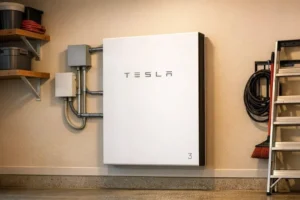
Potentially, yes. Tesla Powerwall systems can be integrated with many existing solar installations, subject to equipment compatibility and electrical design. The specific Powerwall model, existing inverter, backup configuration, and manufacturer requirements must be reviewed before installation.
Often, yes. Enphase offers battery storage designed to integrate with compatible Enphase solar equipment. Compatibility depends on the generation of microinverters, battery model, system controller, and other installation requirements.
Yes. A qualified solar and electrical contractor can evaluate a system installed by another company and determine whether a compatible battery retrofit is possible. Existing warranties, equipment compatibility, and system ownership should be reviewed first.
Not always. An AC-coupled battery may allow you to keep your current inverter. Other installations may benefit from a hybrid inverter replacement, particularly when the original inverter is outdated or failing.
Not necessarily. However, modifications to a solar installation may require utility review and can affect certain rate agreements or grandfathered benefits. Have your current agreement reviewed before making changes.
No. The federal Residential Clean Energy Credit under Section 25D ended for qualifying expenditures after December 31, 2025. Homeowners planning a typical personally owned battery installation in 2026 should not budget for the former 30% residential credit.
It depends on the battery’s power output, usable capacity, and the air conditioner’s electrical requirements. One battery may support certain cooling equipment for a limited period, but central AC can consume stored energy quickly during Phoenix summers. Multiple batteries or load management may be necessary.
The answer depends on your home’s electrical loads, desired backup duration, and whether you want to operate central air conditioning, large appliances, or EV charging equipment. Some homes can meet essential needs with one battery, while whole-home backup often requires two or more.
Many residential batteries use lithium iron phosphate chemistry and thermal management systems to support safe operation. However, all batteries have temperature limits. Proper placement, shade, ventilation, and manufacturer-approved installation conditions remain important in Phoenix.
Yes, if the solar and battery equipment are designed and configured to operate together while disconnected from the grid. Not every existing solar inverter supports this automatically, so confirm the capability before purchasing a battery.
Not necessarily. A panel upgrade may be required if the existing electrical equipment lacks sufficient capacity, space, or compatibility for the proposed installation. A qualified electrician should evaluate the panel before recommending replacement.
Many residential batteries have manufacturer warranties of approximately 10 years, although actual warranty terms vary. Battery life depends on chemistry, operating temperatures, cycling, charging behavior, and other factors. Review both warranty duration and capacity-retention provisions.
Some battery systems are modular and support future expansion. However, additional batteries may require compatible equipment, available installation space, electrical modifications, or new approvals. If expansion is a possibility, plan for it during the initial design.
Physical installation often takes approximately one to two days for a straightforward retrofit. Design, permitting, utility review, equipment availability, inspections, and commissioning can extend the overall project timeline to several weeks or longer.
It can be, particularly if you value outage protection or have a utility rate plan that rewards using stored solar electricity during expensive periods. The financial return depends on installation cost, export compensation, household consumption, and battery operation. A personalized assessment is more useful than a generic savings estimate.